
 1Password
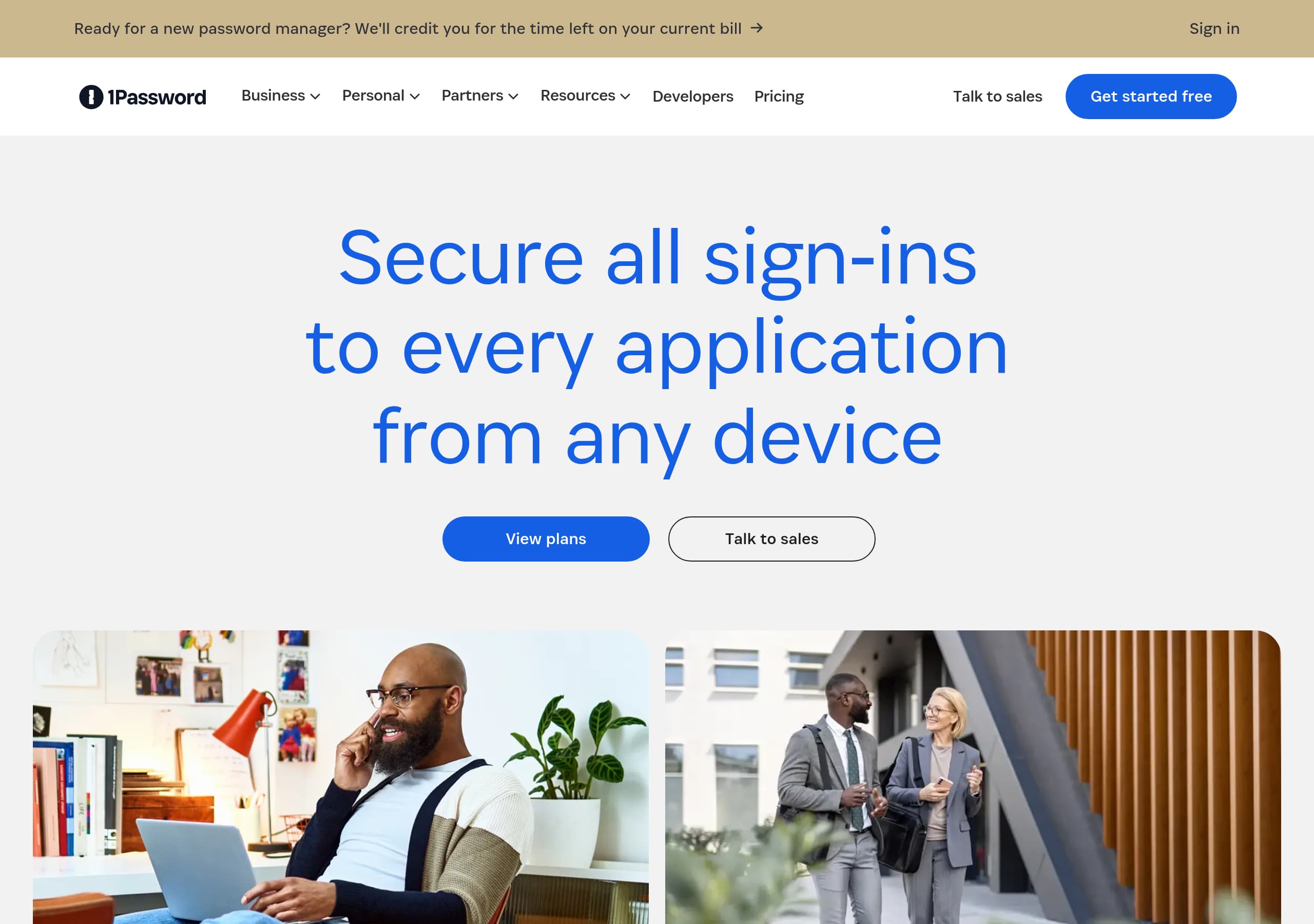
1Password’s homepage clarifies two distinct offers—Personal/Families and Business/Enterprise—and routes visitors with parallel CTAs like “View plans” and “Talk to sales,” so intent is captured quickly.
View breakdown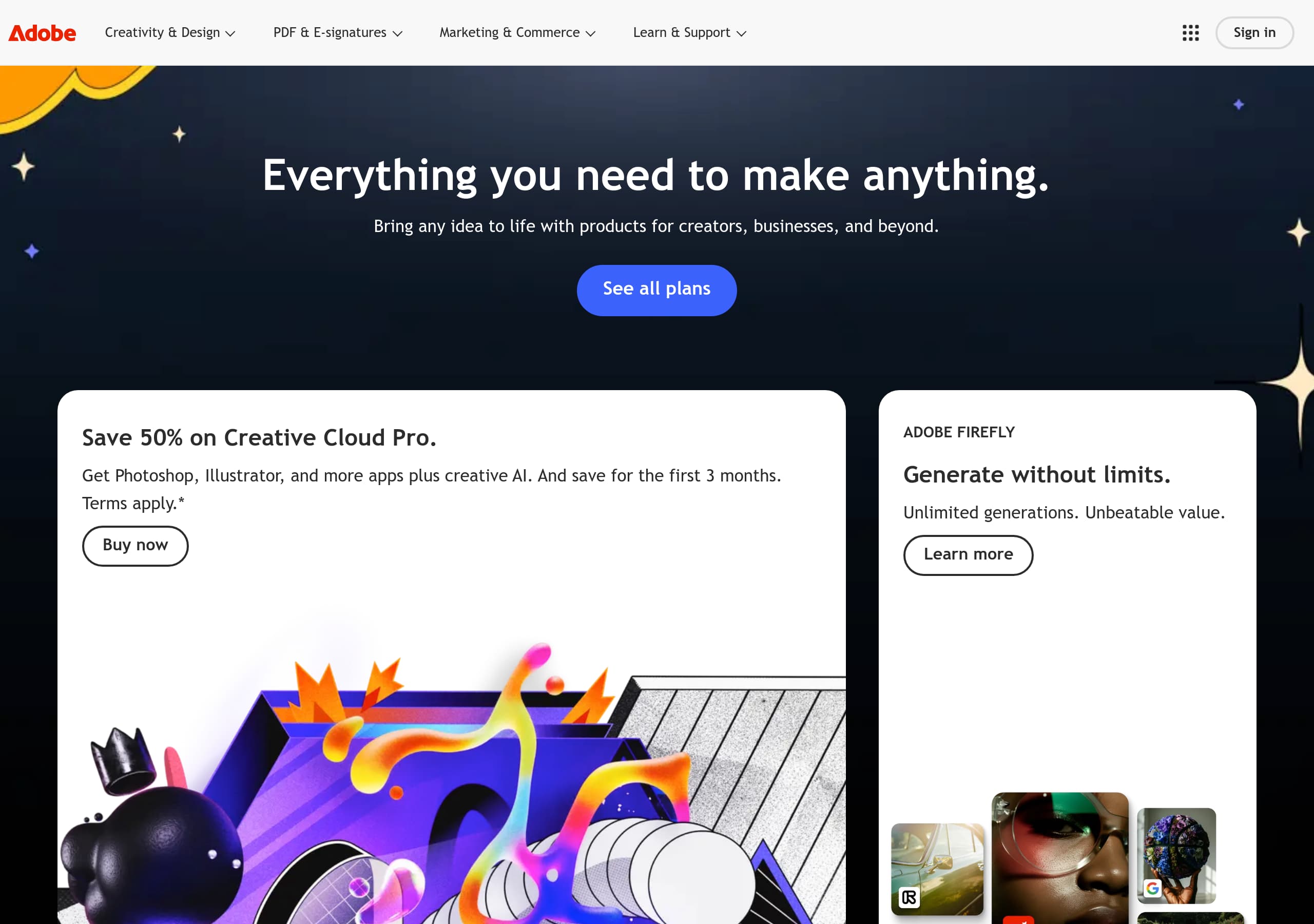 Adobe Creative Cloud
Adobe Creative Cloud’s homepage converts by pairing a broad umbrella promise (“Everything you need to make anything”) with immediate, plan-level CTAs like “See all plans” and a time-bound discount offer that creates urgency.
View breakdown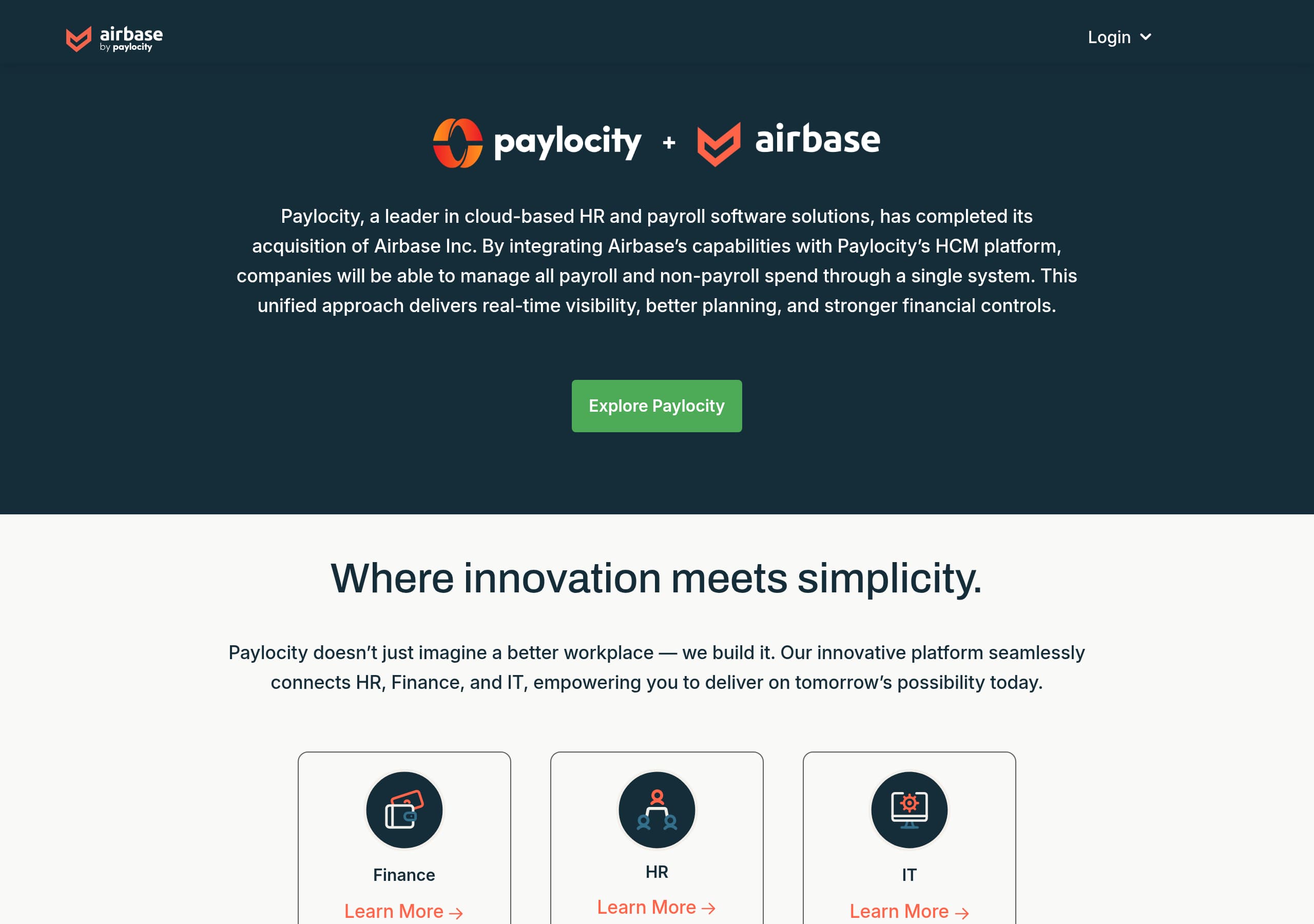 Airbase
Airbase’s homepage currently leads with the Paylocity acquisition message, which is clear for existing customers but dilutes the product value proposition for new buyers unless they click through to Paylocity for Finance.
View breakdown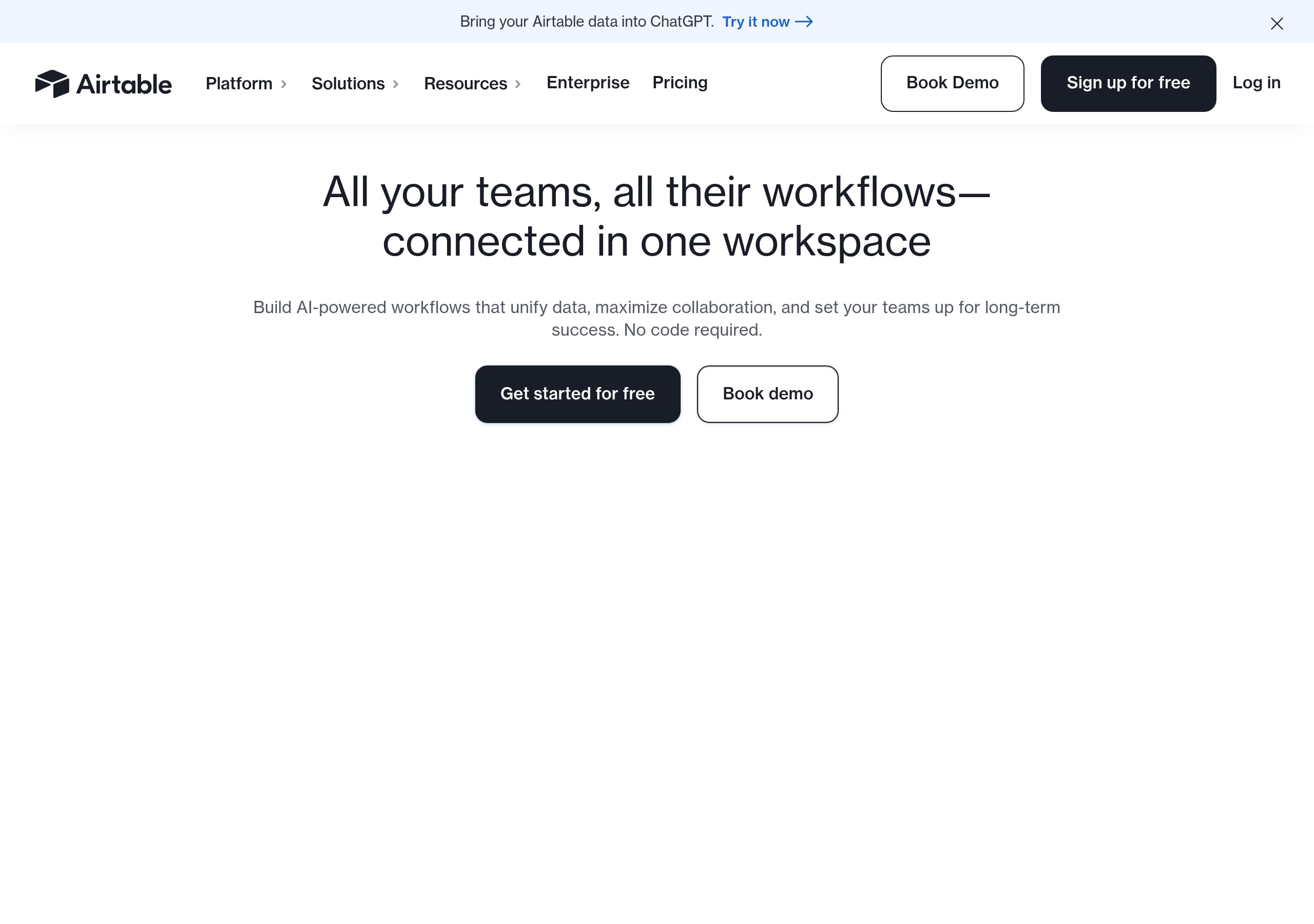 Airtable
Airtable’s homepage makes an enterprise AI positioning feel concrete by pairing a single, high-level promise (“AI workflows, apps & agents”) with four scannable pillars and immediate “Get started for free” / “Book demo” dual CTAs.
View breakdown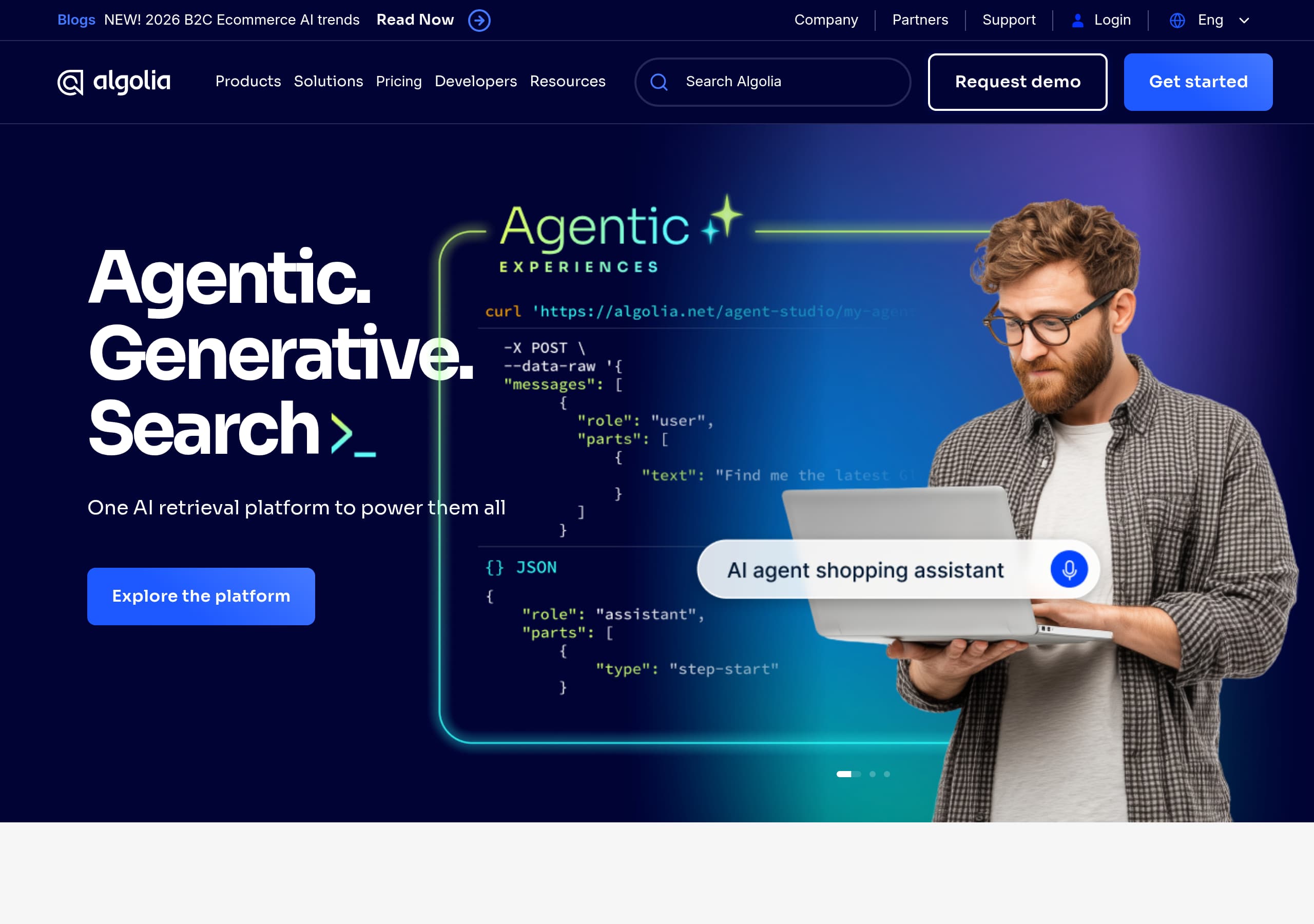 Algolia
Algolia makes its positioning unambiguous by framing the product as “The AI search and retrieval platform” and then immediately clarifying the three modes it supports: **Agentic**, **Generative**, and **Search**.
View breakdown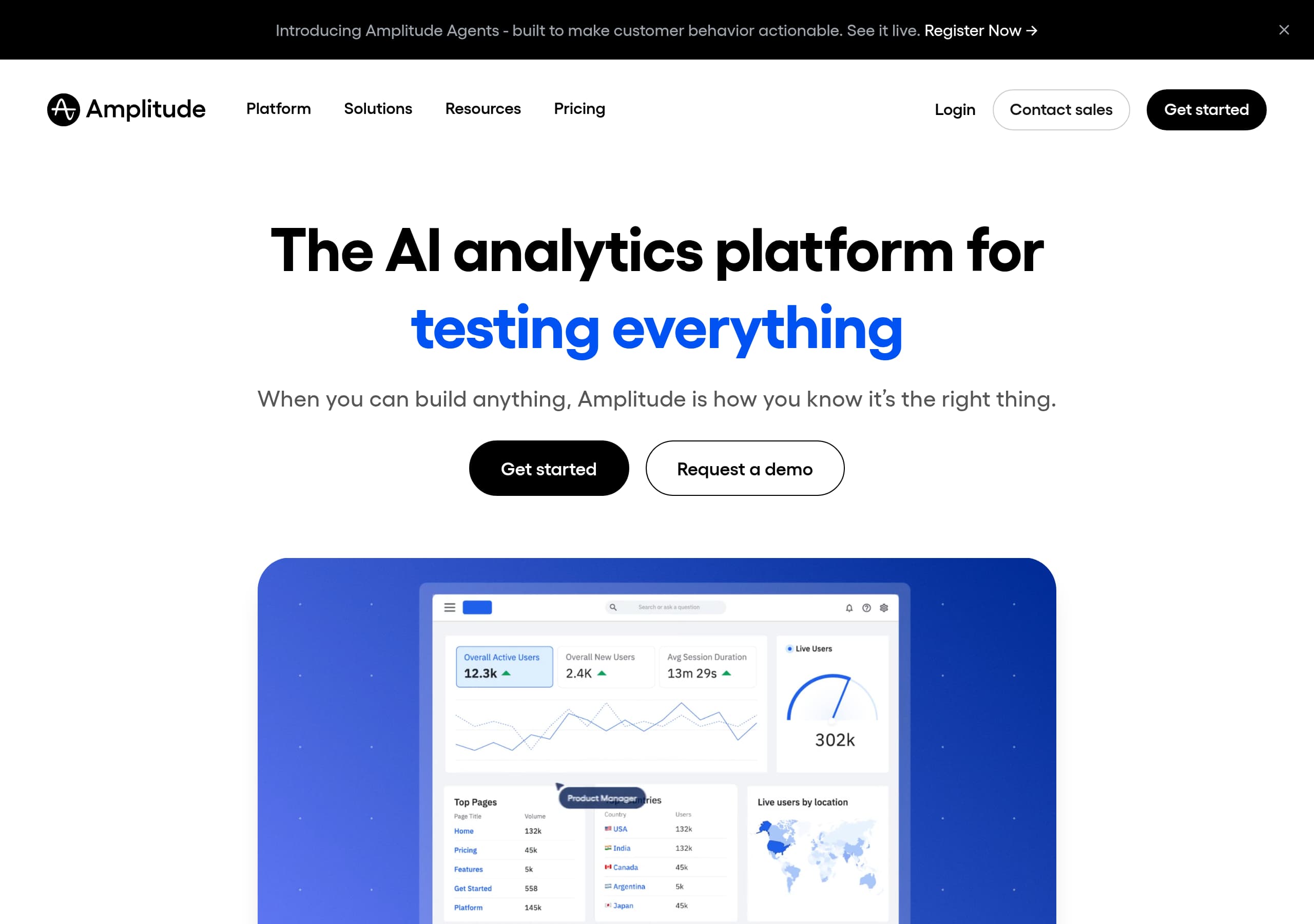 Amplitude
Amplitude’s homepage leads with a clear category position, “The AI analytics platform,” then immediately offers two conversion paths, **Get started** and **Request a demo**, which fits both self-serve teams and enterprise buyers.
View breakdown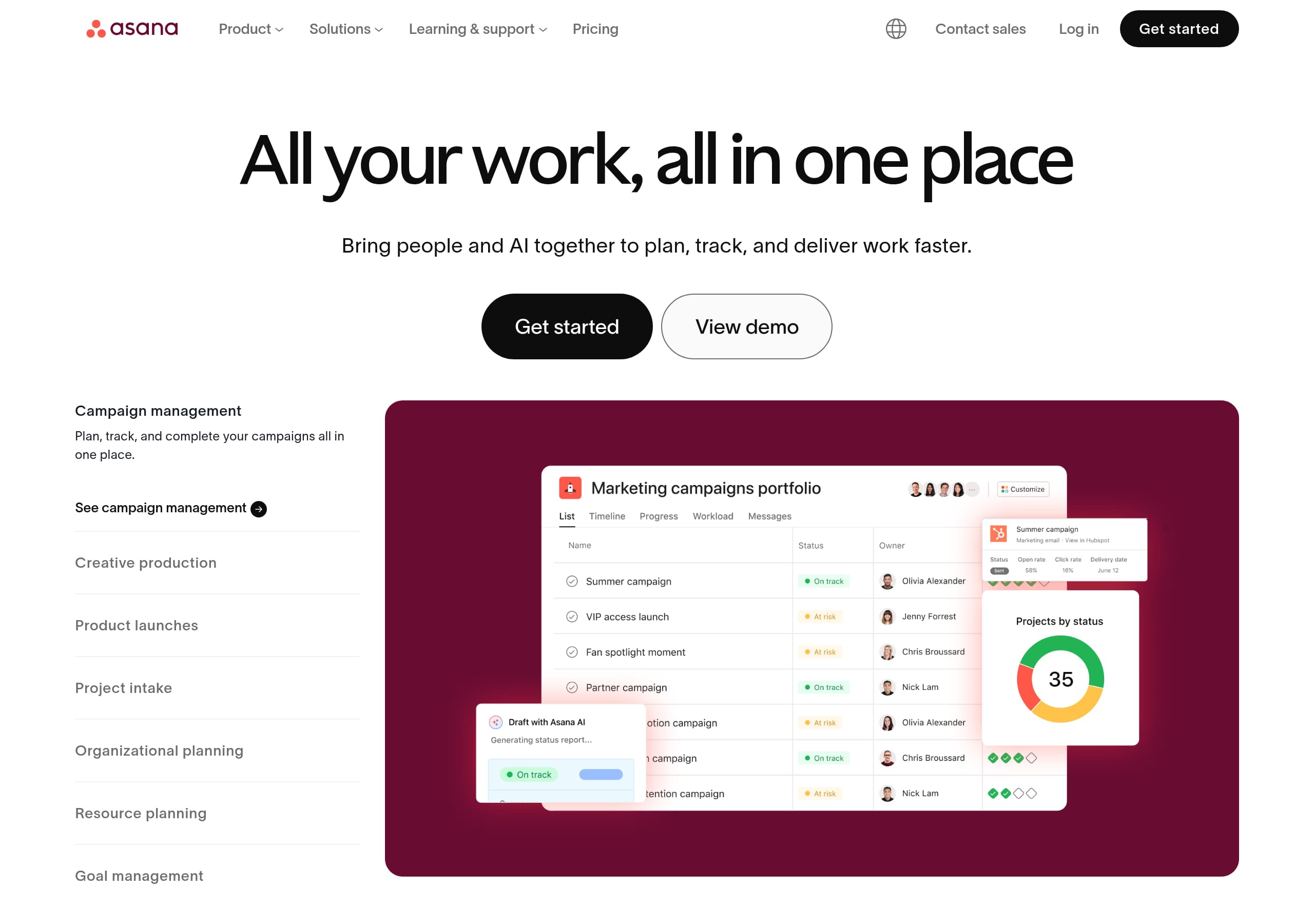 Asana
AsanaAsana’s homepage clarifies the category and outcome fast by pairing a single-sentence value prop (“All your work, all in one place”) with dual CTAs (“Get started” and “View demo”) that serve both self-serve and sales-led buyers.
View breakdown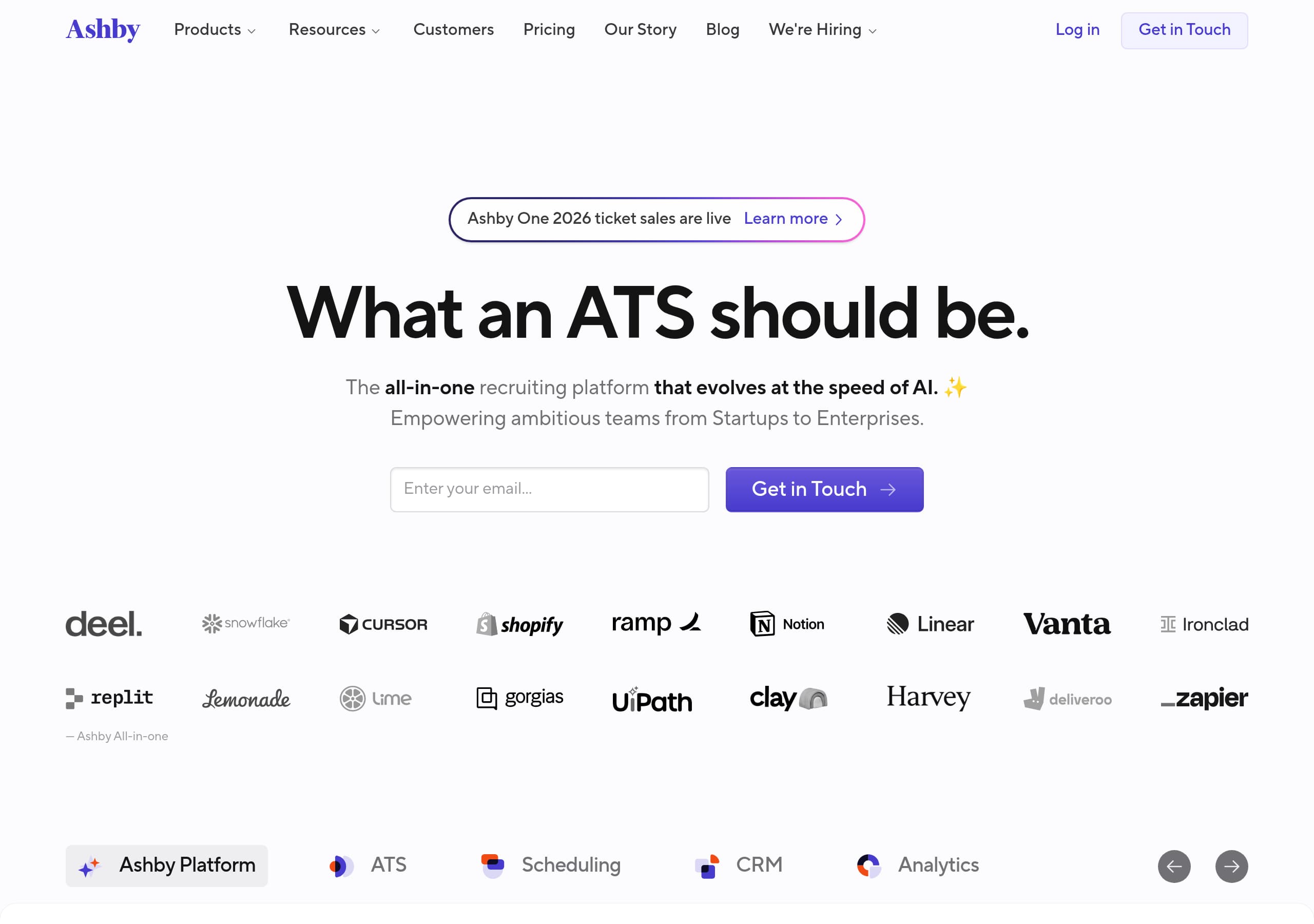 Ashby
AshbyAshby’s homepage succeeds on clarity by anchoring the entire story to a single, memorable promise—“What an ATS should be”—then immediately expanding it into an all-in-one scope (ATS, Scheduling, CRM, Analytics), with AI positioned as a platform layer
View breakdown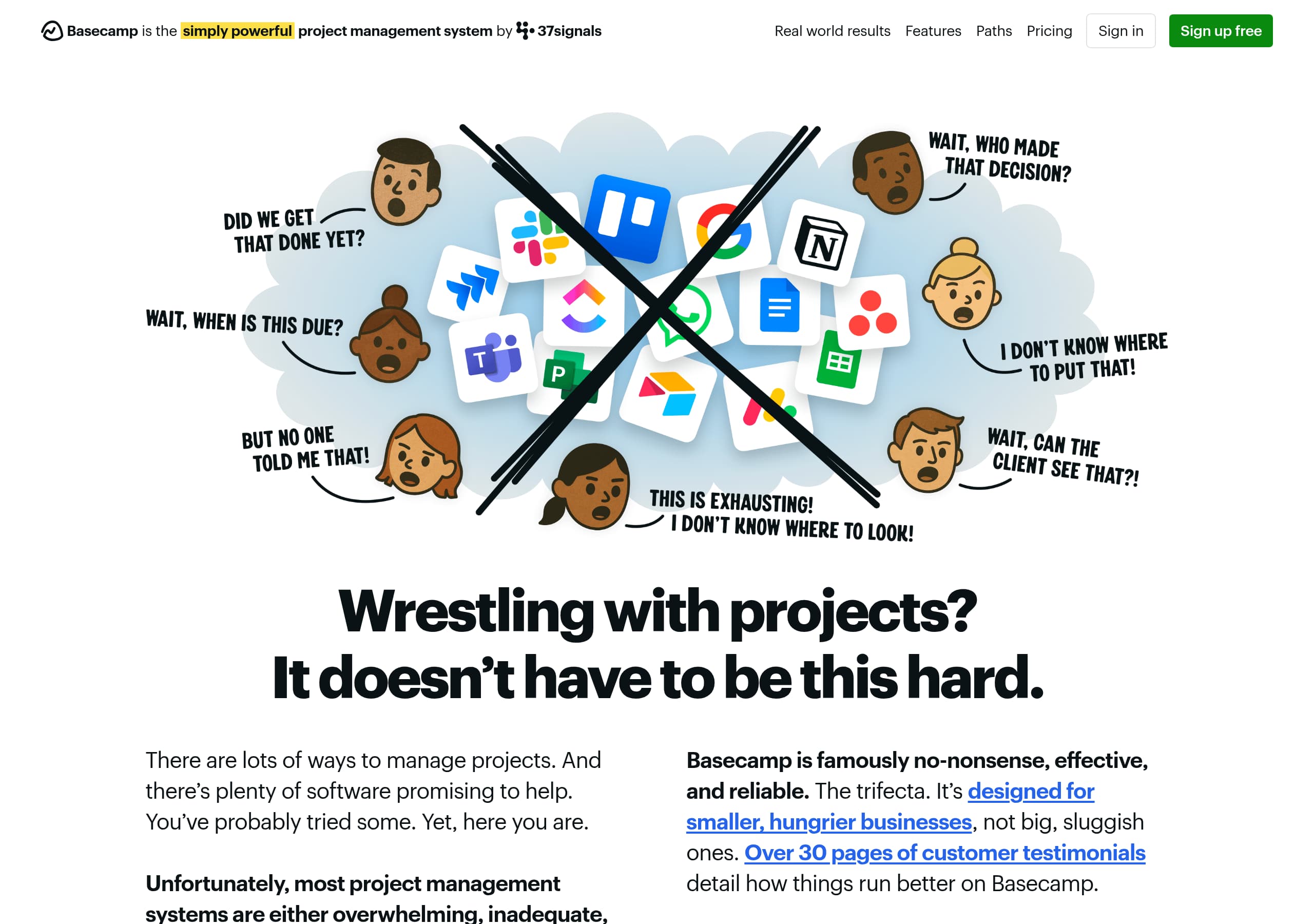 Basecamp
Basecamp’s homepage leads with a contrarian, plainspoken promise (“refreshingly straightforward”) and backs it up with specific credibility markers like a 21-year track record and quantified uptime, which reduces skepticism early.
View breakdown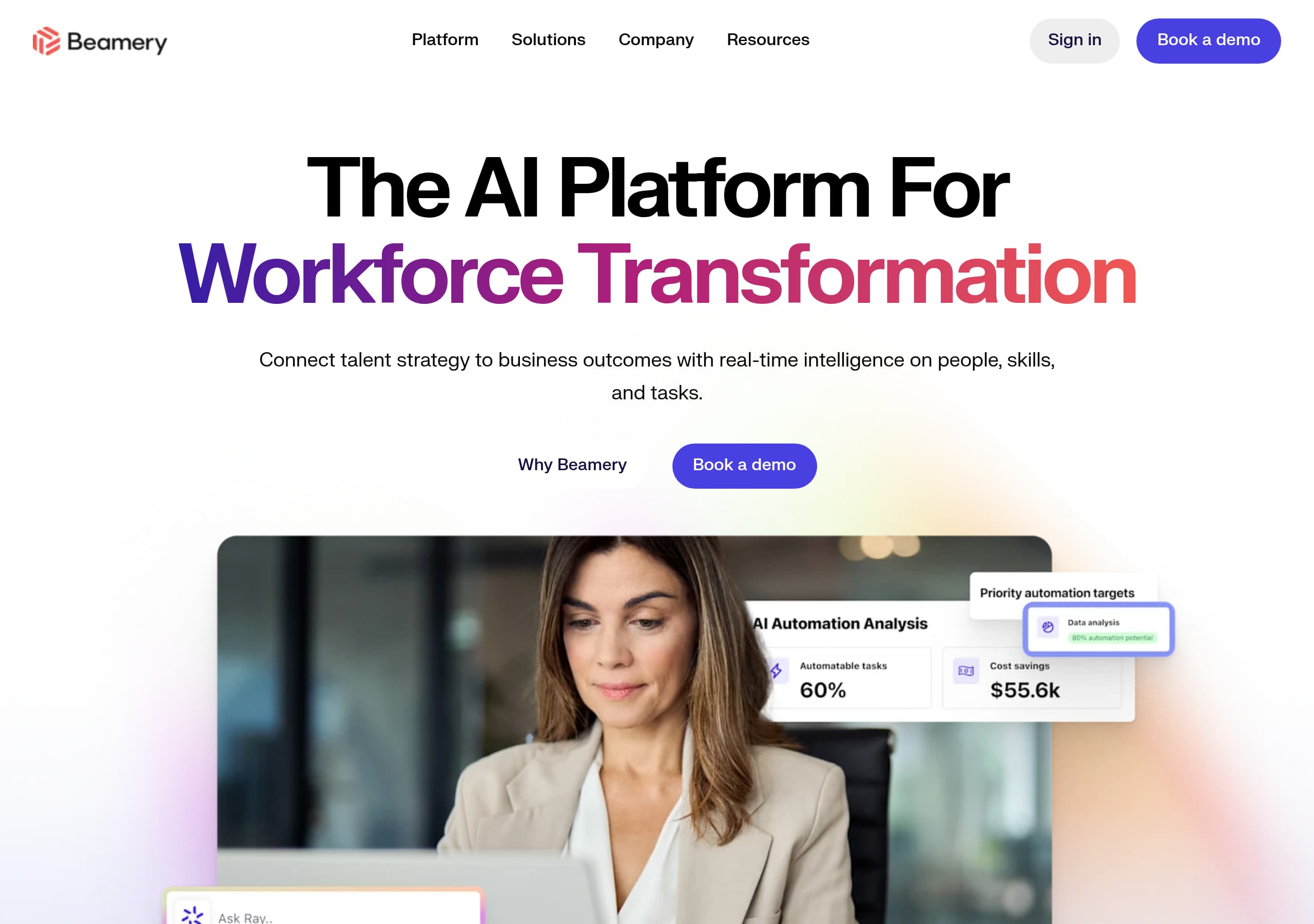 Beamery
Beamery’s homepage nails enterprise positioning with a single, outcome-led headline, “The AI Platform For Workforce Transformation,” and supports it with concrete objects: people, skills, and tasks.
View breakdown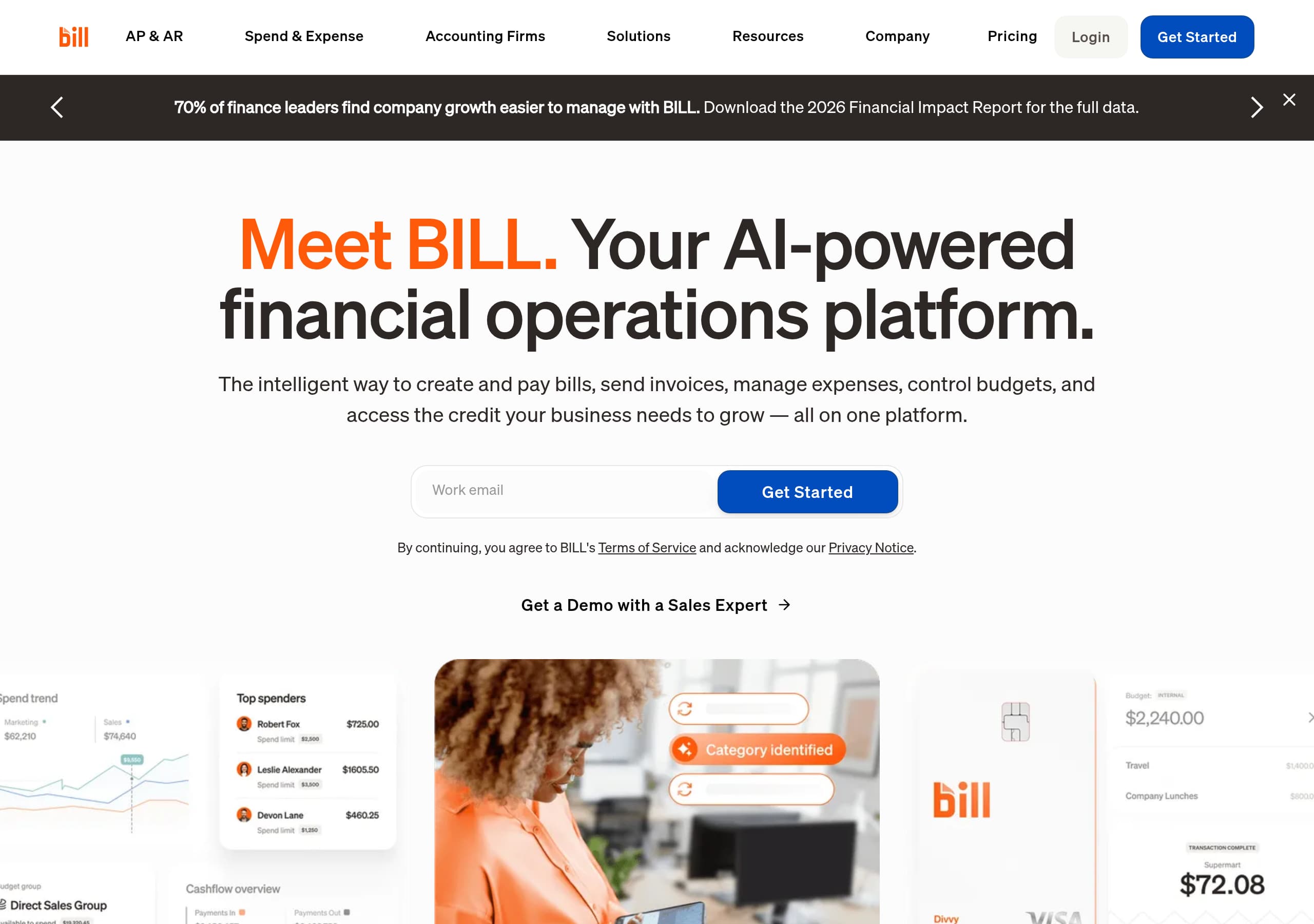 Bill.com
Bill.com’s homepage quickly clarifies the category and bundle by positioning BILL as an “AI-powered financial operations platform” that unifies AP, AR, spend, and expense in one place, supported by a single, multi-action headline.
View breakdown Bloomfire
Bloomfire’s homepage is strongest when it anchors on a single, enterprise-ready promise, “Create the Intelligence Layer for Your Organization,” then reinforces it with concrete outcomes like “find trusted answers” and “avoid duplicate work.”
View breakdown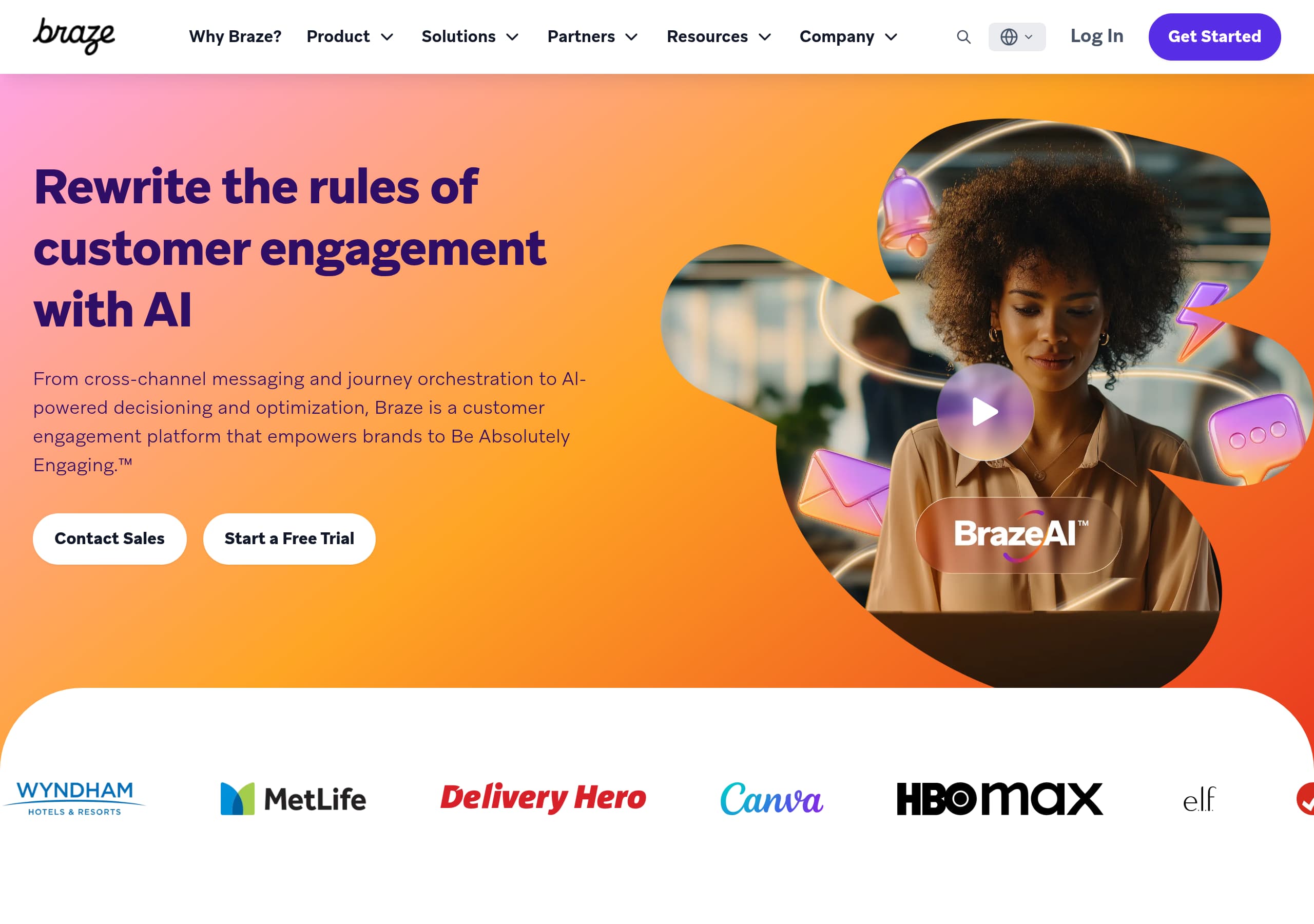 Braze
BrazeBraze’s homepage wins by collapsing a complex “customer engagement platform” story into a simple 3-part narrative: unify data, add AI, and execute cross-channel messaging, reinforced by dual CTAs (“Contact Sales” and “Start a Free Trial”).
View breakdown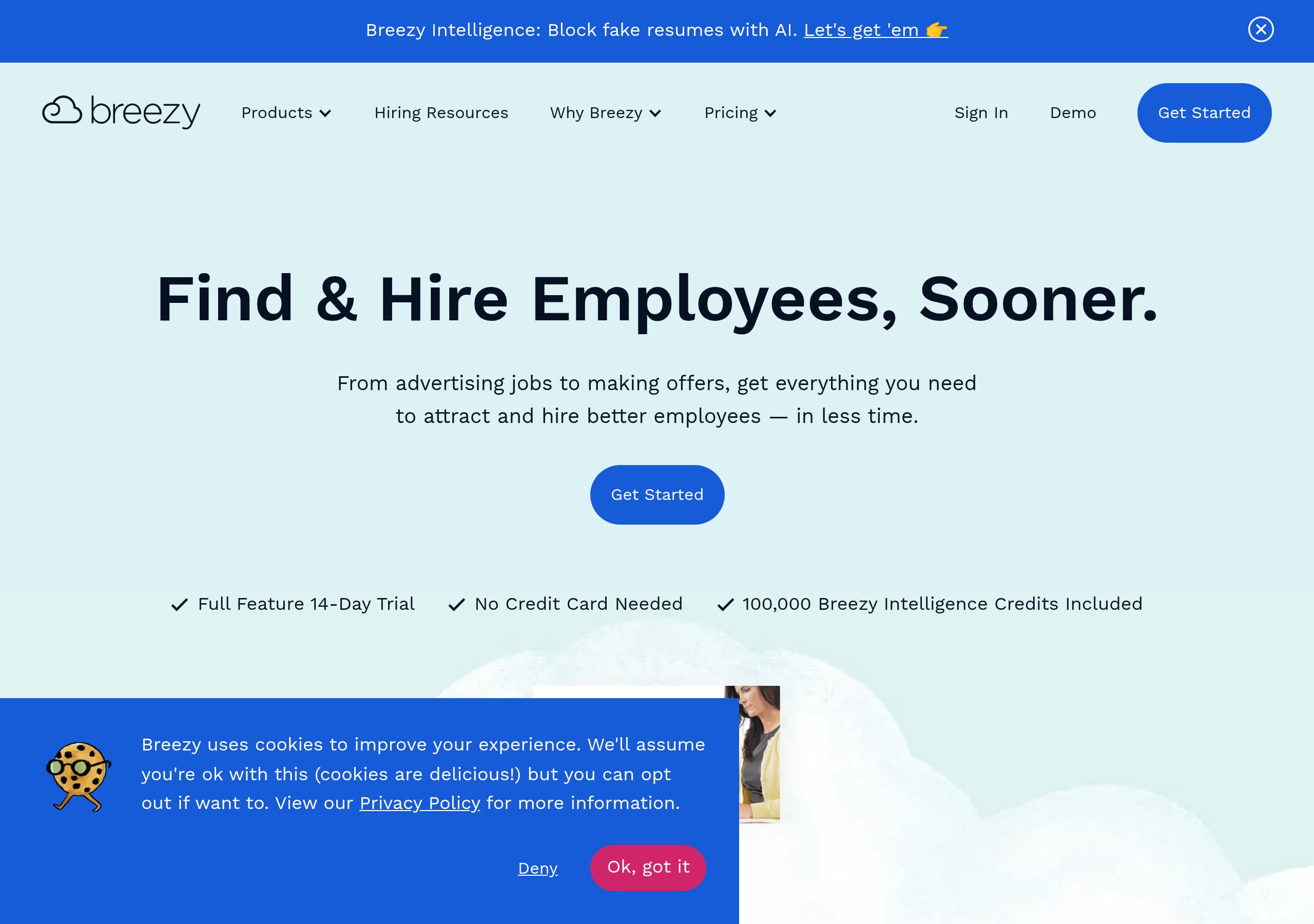 Breezy HR
Breezy HR’s homepage communicates an end-to-end hiring promise quickly by repeating the same 3-stage framework, “Advertise & Attract”, “Automate & Qualify”, and “Hire & Measure”, which makes the product feel complete without needing deep scrolling.
View breakdown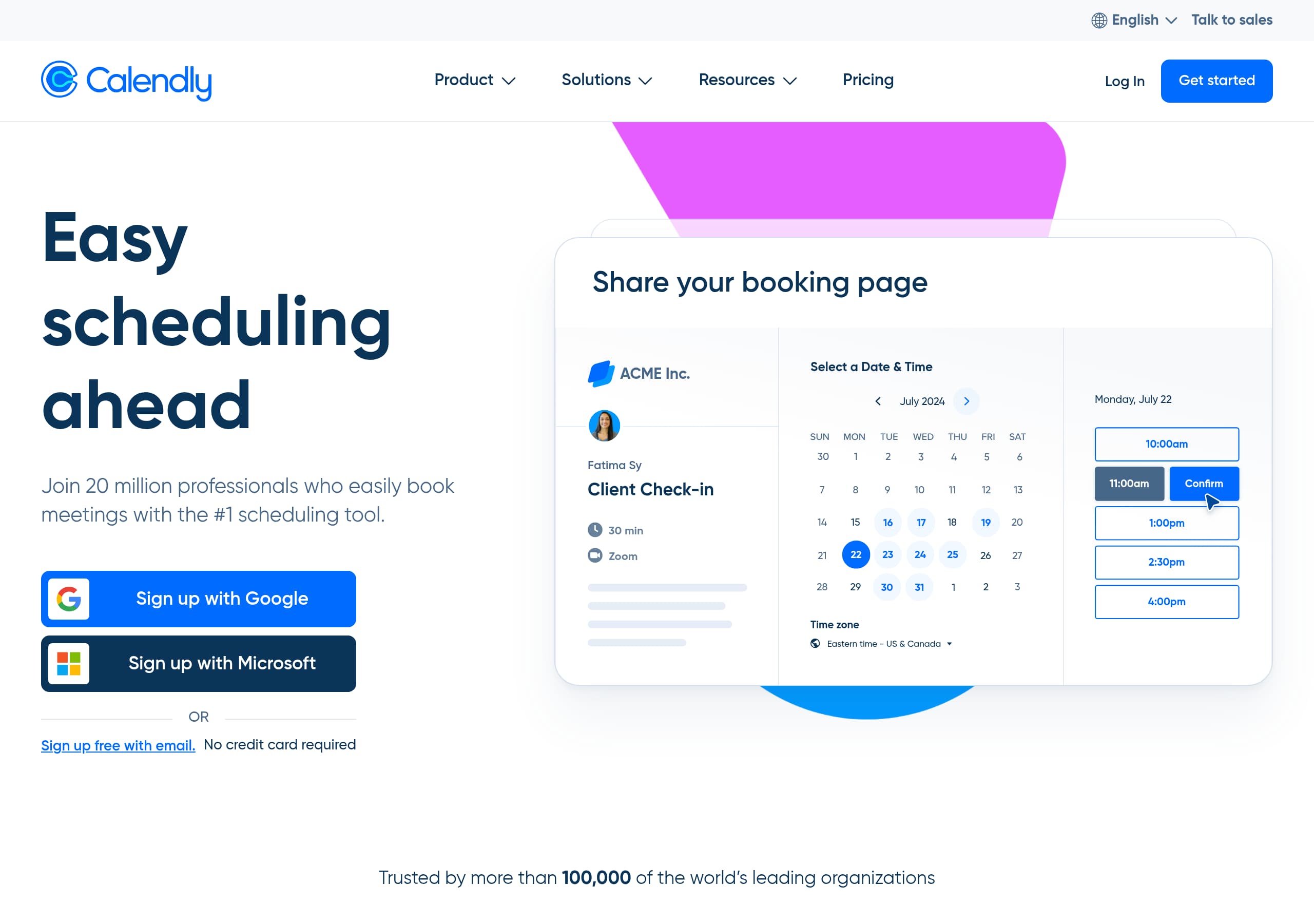 Calendly
Calendly’s homepage leads with a plain-language promise, “Calendly makes scheduling simple,” and immediately supports it with a product-fit statement that spans individuals to enterprises, which reduces confusion for mixed audiences.
View breakdown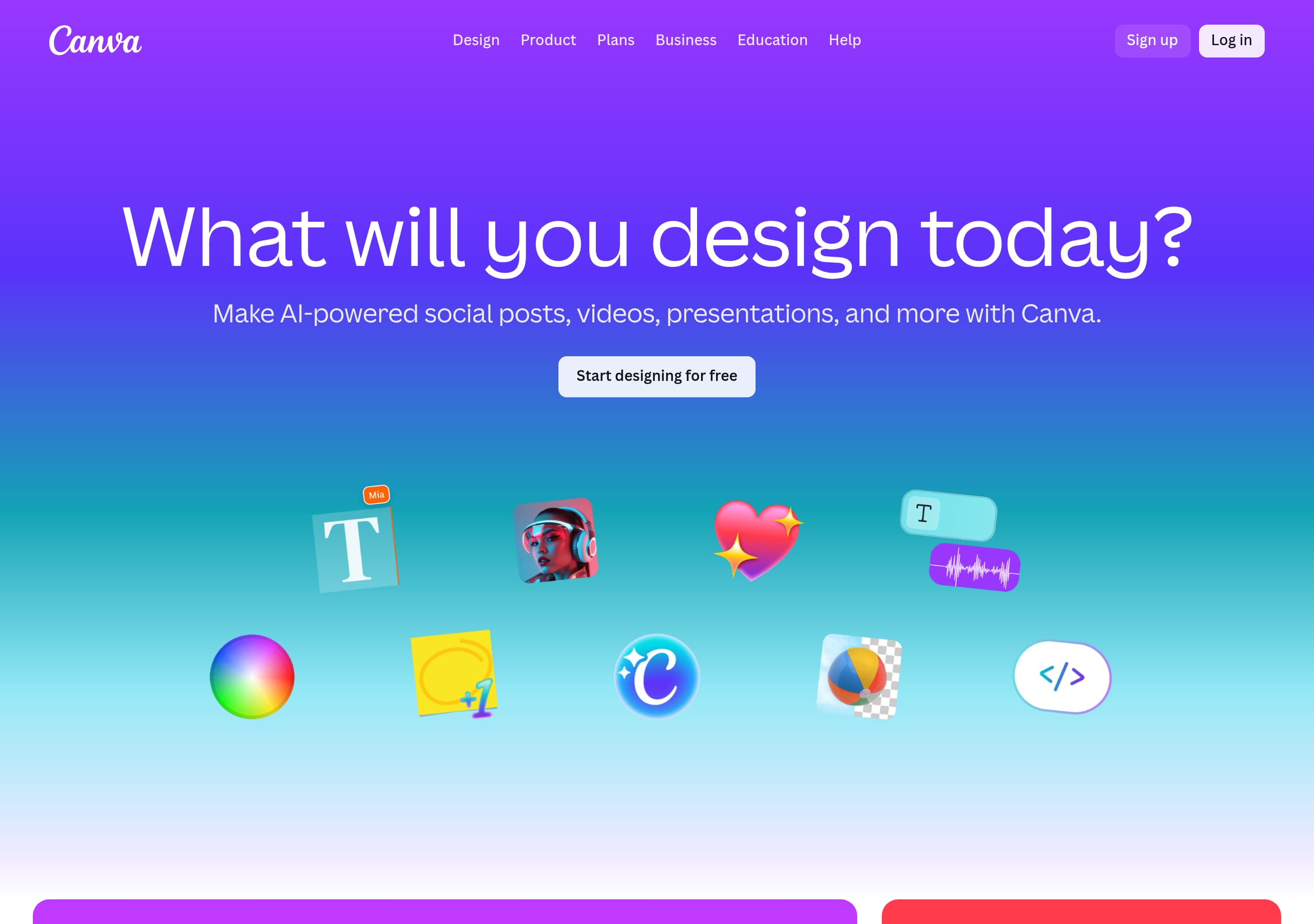 Canva
CanvaCanva’s homepage compresses a broad product into a simple “make anything” promise, then immediately routes users into templates and primary CTAs, reducing time-to-first-design.
View breakdown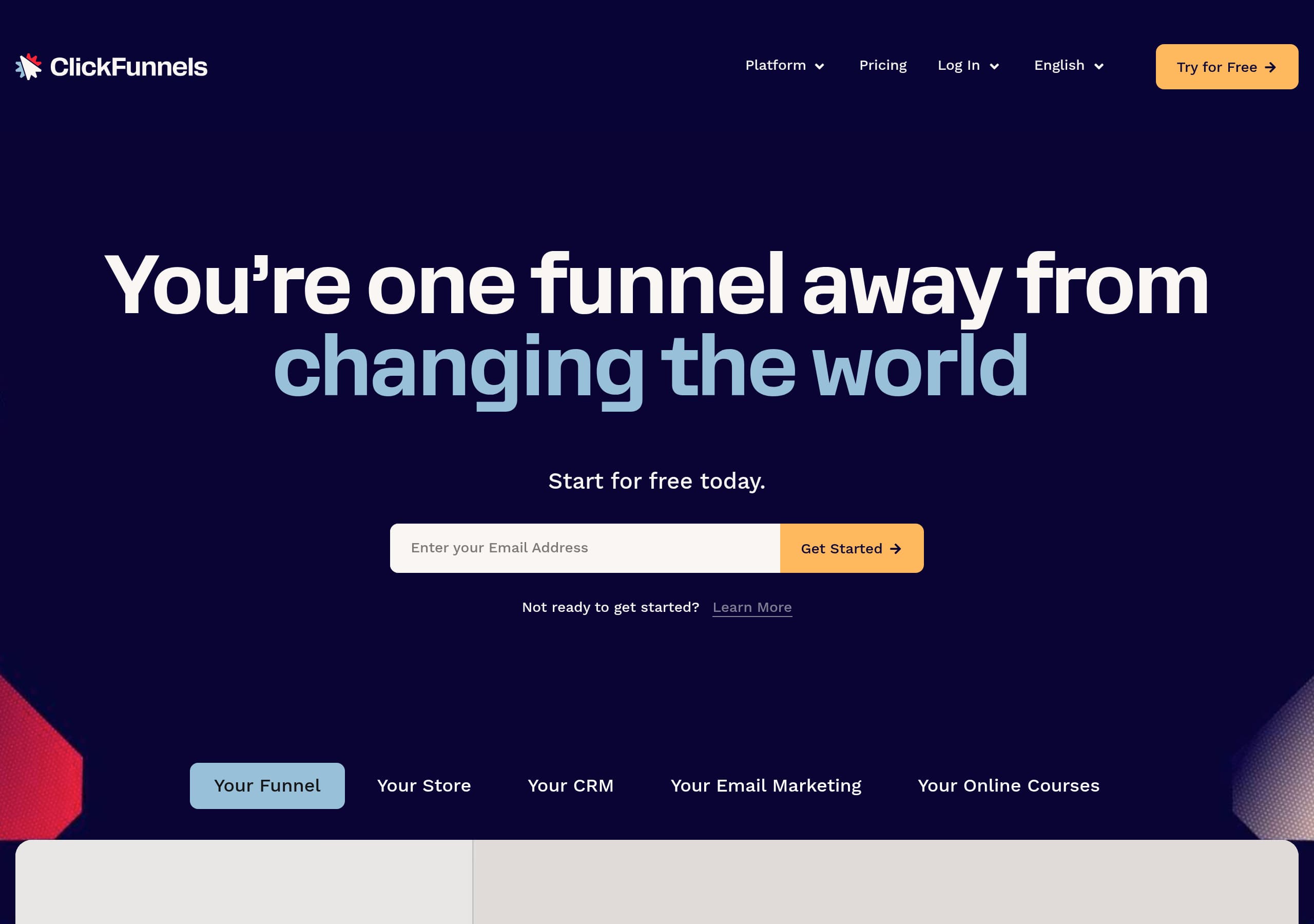 ClickFunnels
ClickFunnels leads with a direct promise and a low-friction CTA, pairing “You’re one funnel away from changing the world” with repeated **Try for Free** and an email-only field to minimize hesitation.
View breakdown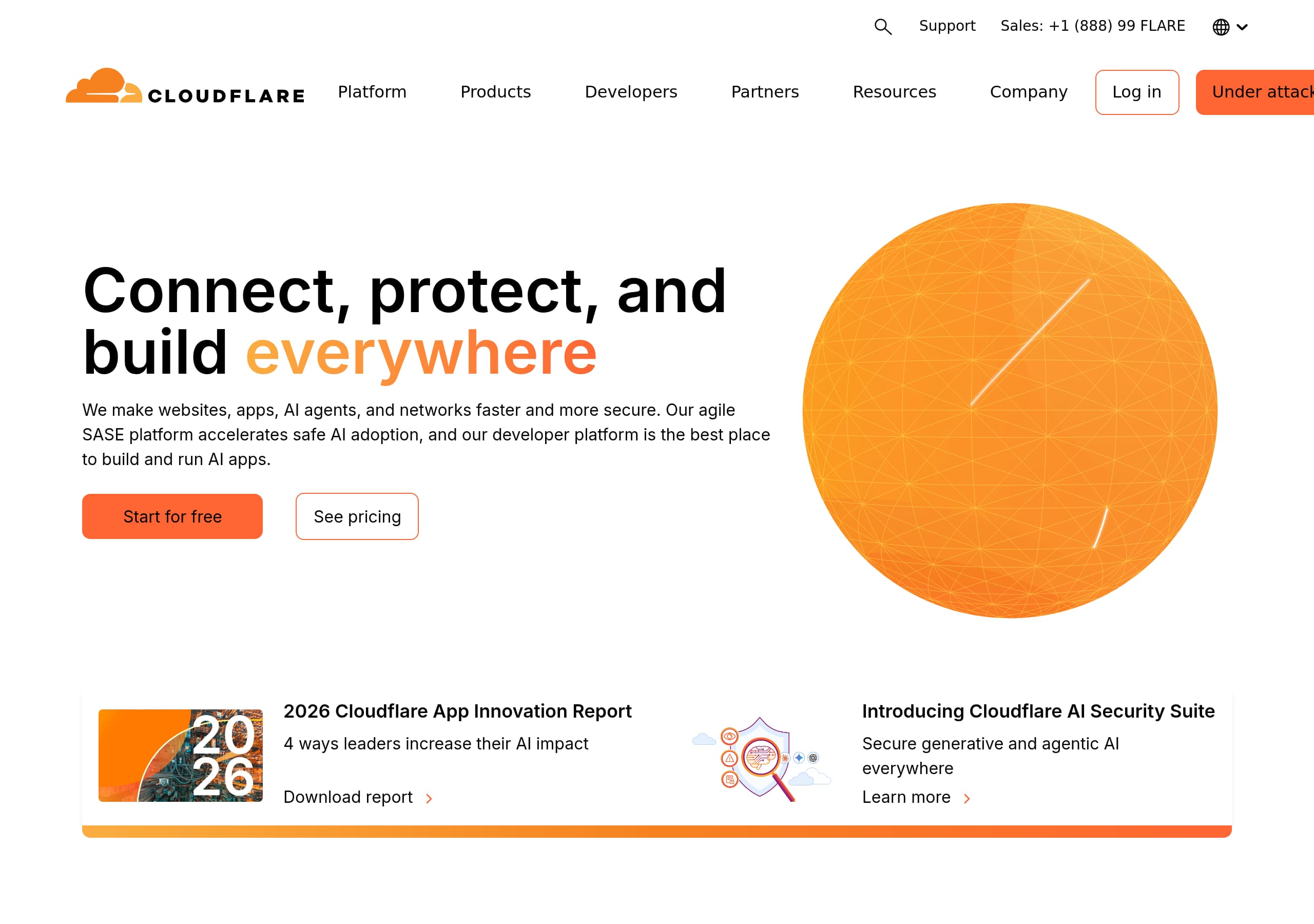 Cloudflare
Cloudflare’s homepage is optimized for multi-audience clarity by pairing a broad “connect, protect, and build” promise with immediate segmentation into Enterprise, Small business, and Developers paths.
View breakdown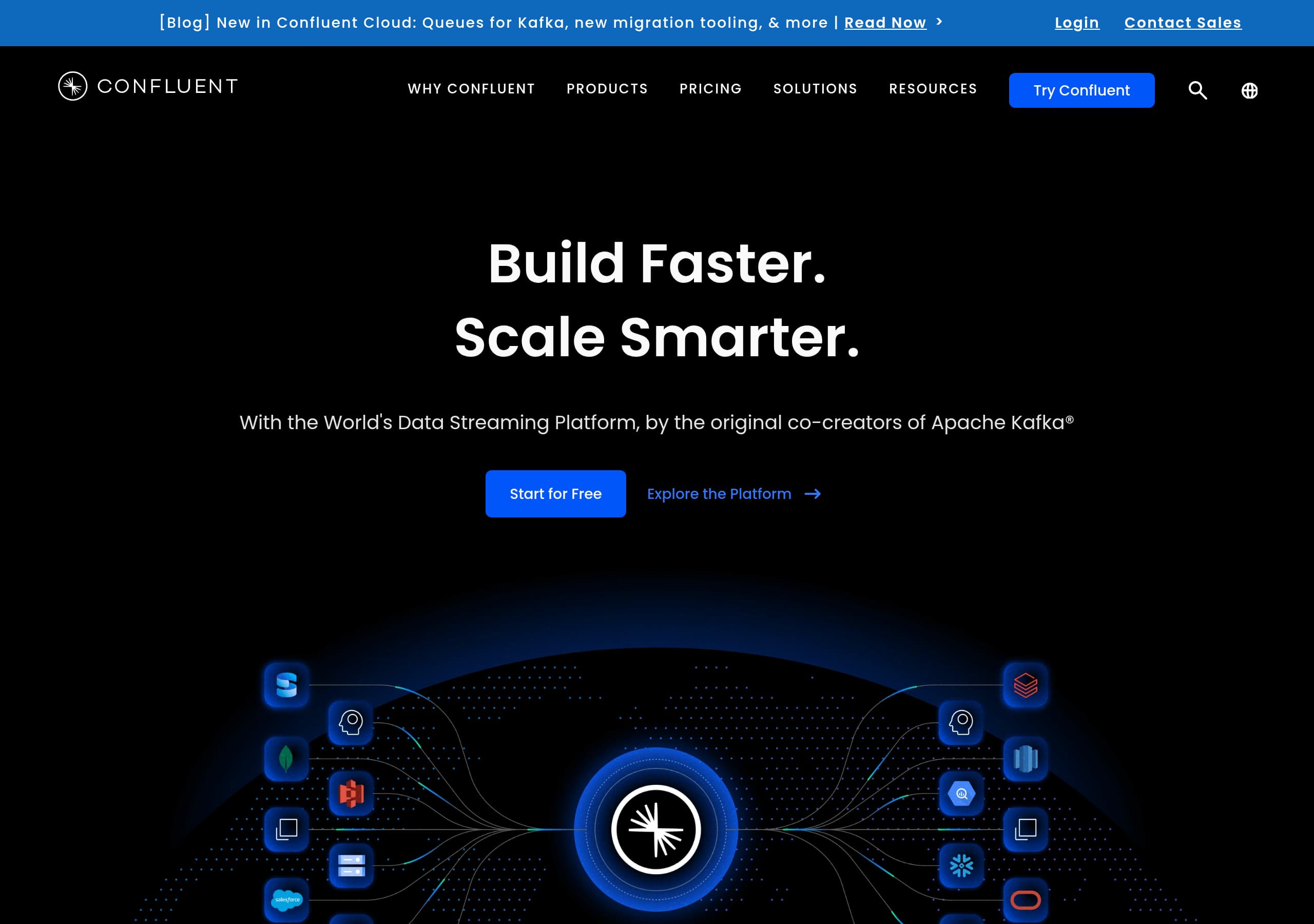 Confluent
Confluent’s homepage nails positioning by pairing a single, category-defining headline with immediate authority—“The World’s Data Streaming Platform, by the original co-creators of Apache Kafka®”—which clarifies why it is not just “managed Kafka.”
View breakdown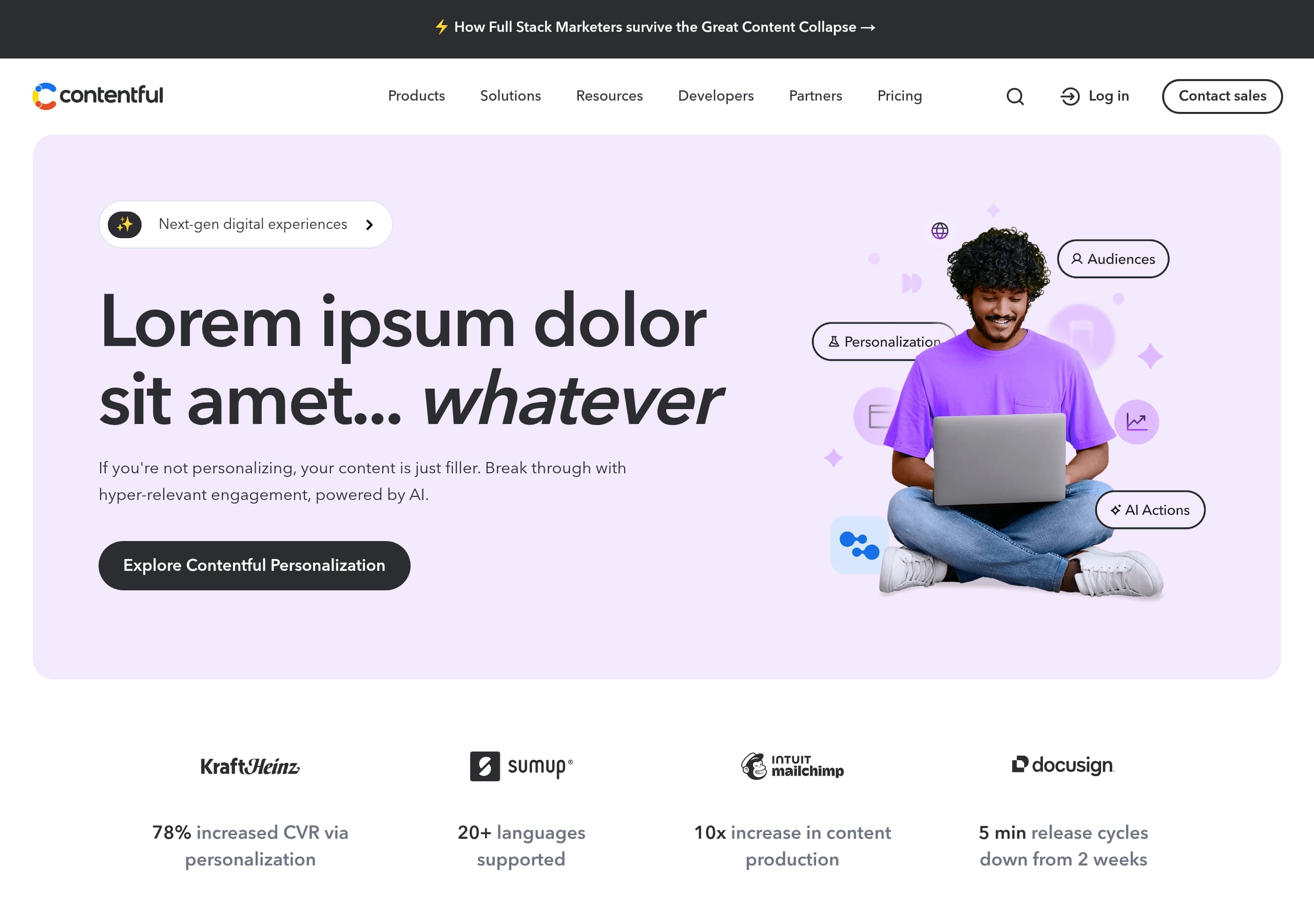 Contentful
Contentful’s homepage communicates an enterprise DXP story quickly by pairing a punchy value proposition with concrete outcomes like “99.99% Uptime” and “4.6B delivery requests,” which reduces ambiguity for buyers evaluating scale.
View breakdown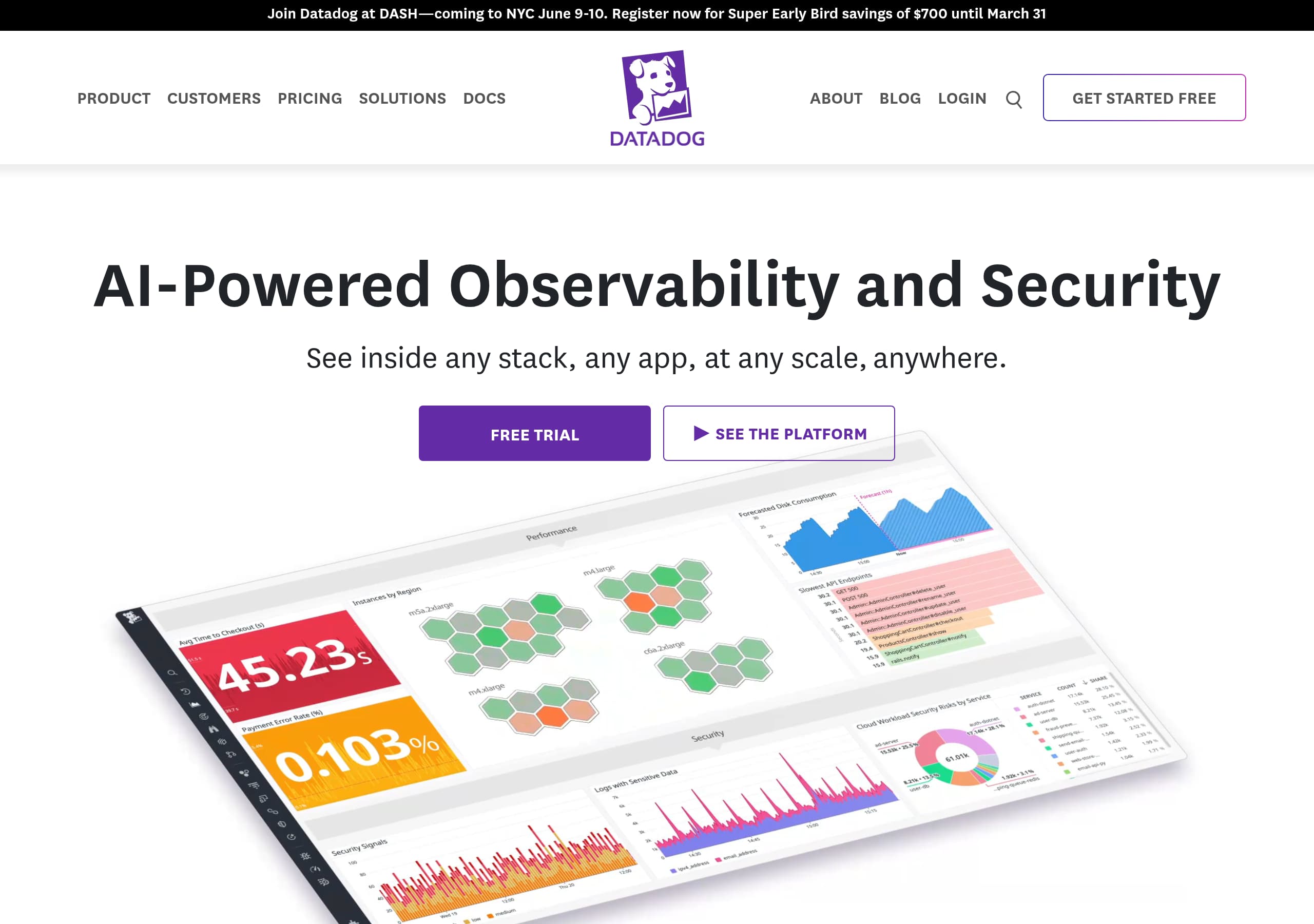 Datadog
Datadog’s homepage wins by collapsing a broad platform into one crisp promise—“AI-Powered Observability and Security”—then immediately backing it with a clear primary CTA (“Free trial”) and a secondary exploratory CTA (“See the platform”).
View breakdown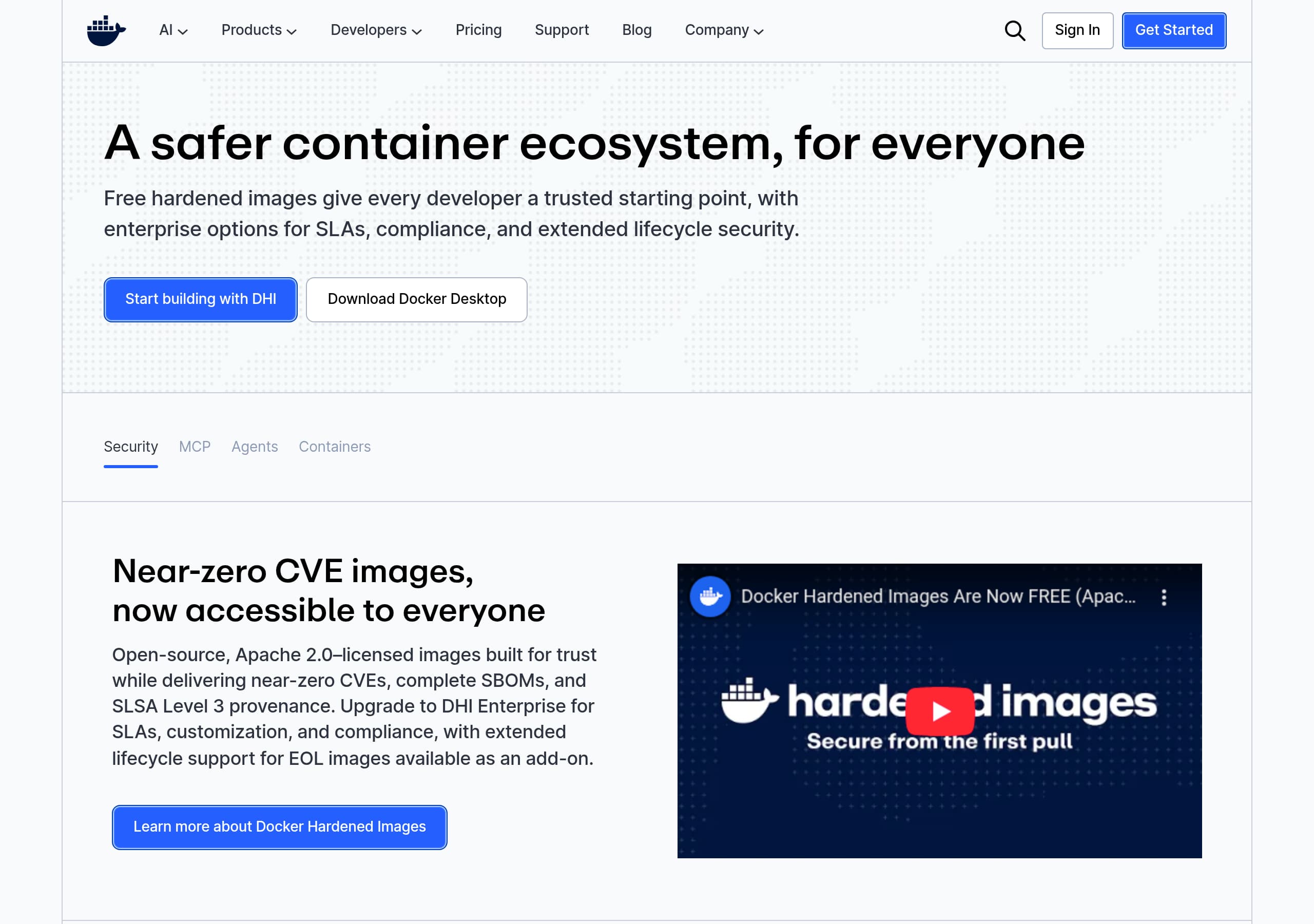 Docker
Docker’s homepage succeeds by compressing multiple product lines into a single narrative about secure, reproducible development, using clear, action-oriented headlines like “Deliver Quickly. Build Securely. Stay Competitive.” and repeated download CT
View breakdown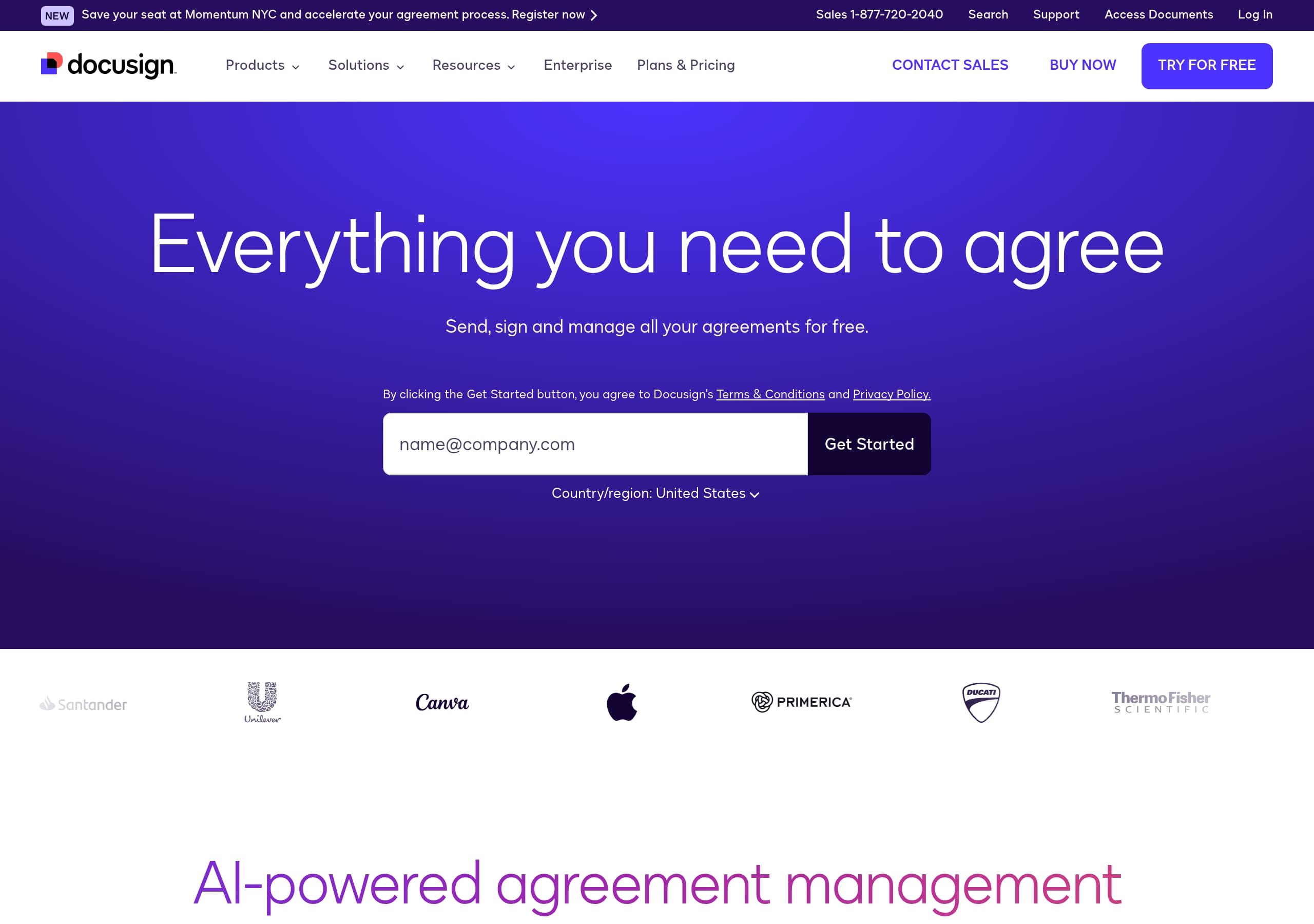 DocuSign
DocuSign positions itself beyond eSignature by consistently anchoring messaging around Intelligent Agreement Management (IAM), which expands the perceived scope from signing to end-to-end agreement operations.
View breakdown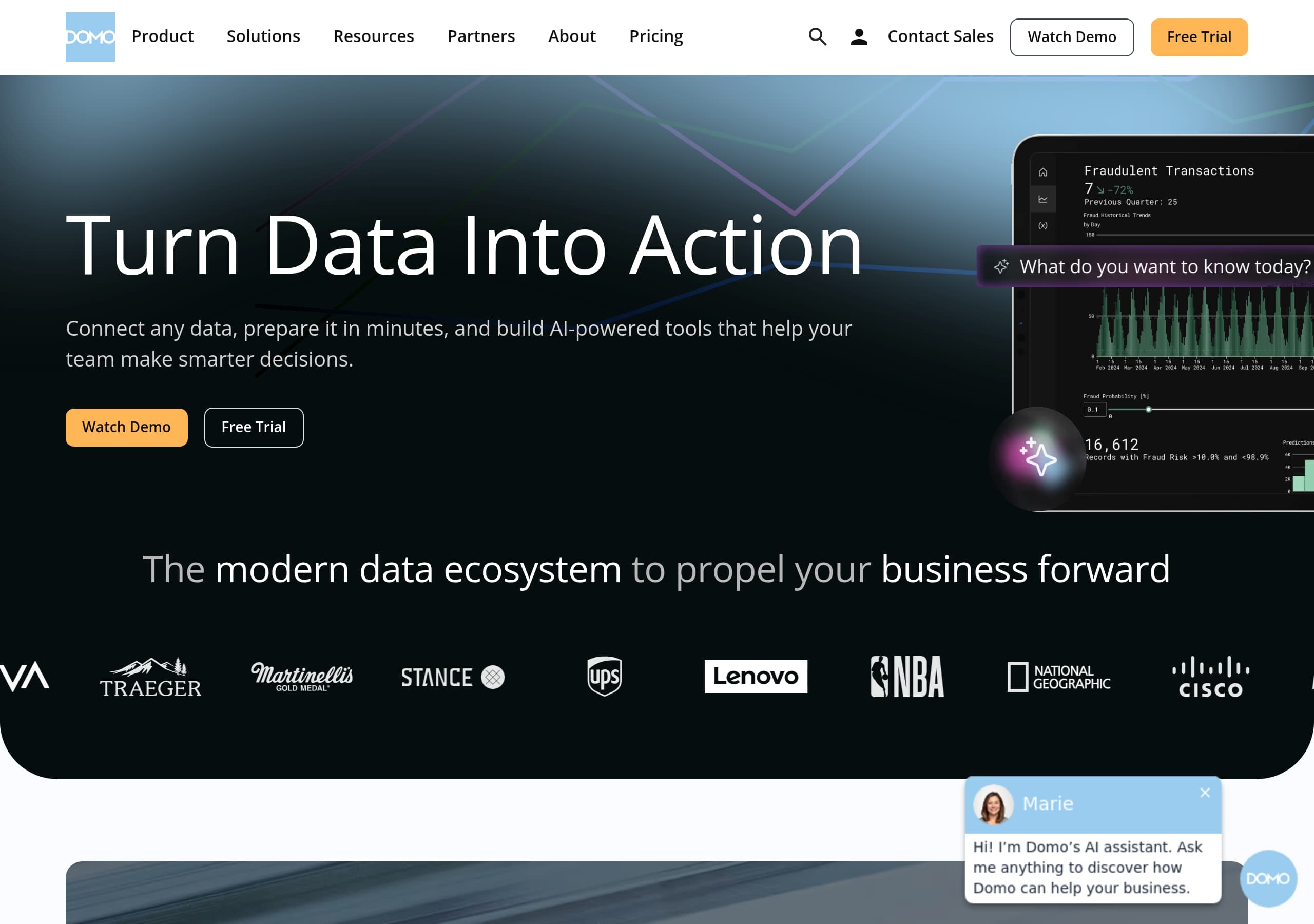 Domo
DomoDomo positions itself clearly as an end-to-end platform with a single headline, “The AI and Data Products Platform,” then immediately supports it with dual primary CTAs, **Watch Demo** and **Free Trial**, to match enterprise and self-serve intent.
View breakdown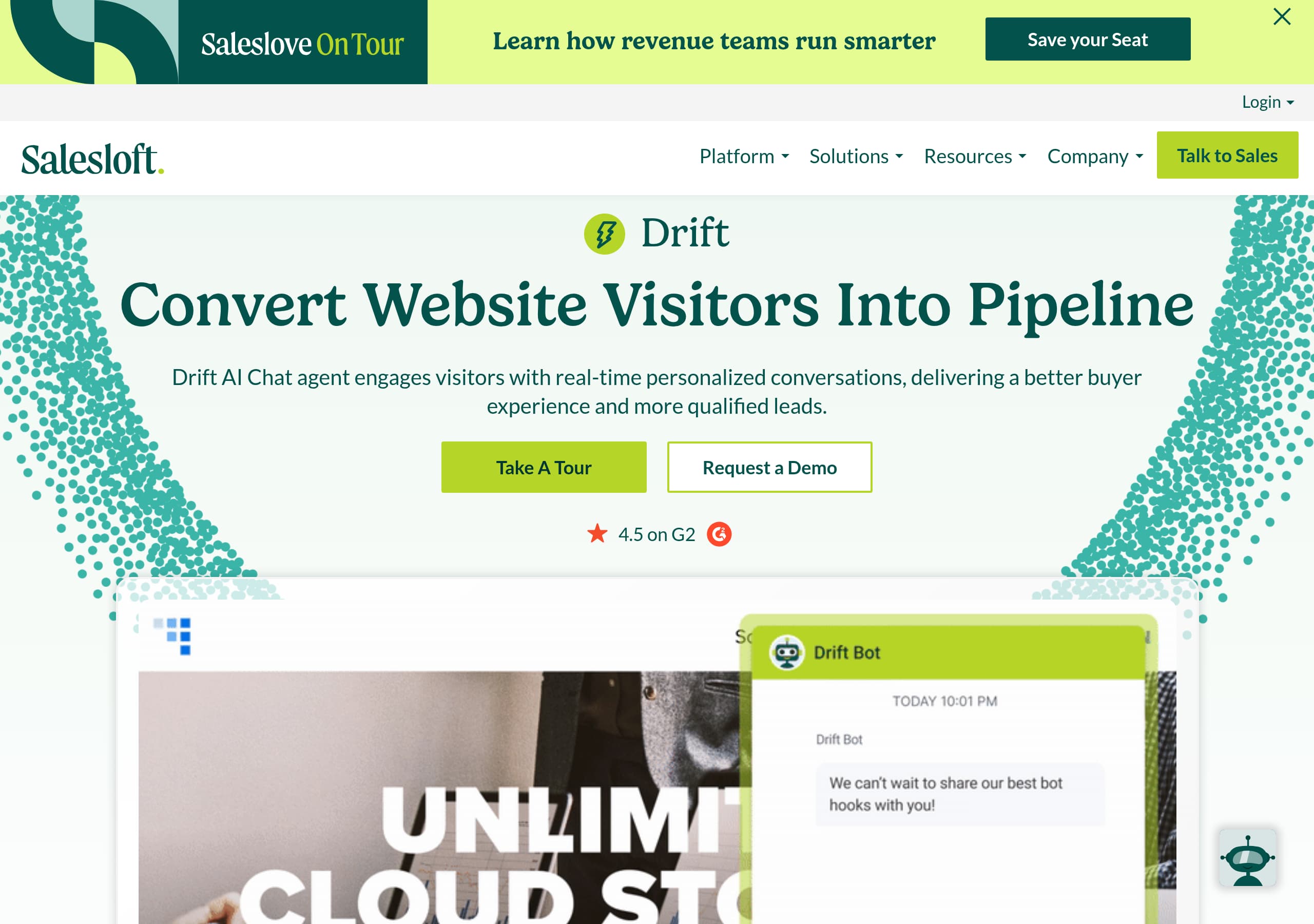 Drift
DriftDrift’s homepage states the outcome clearly with “Convert Website Visitors Into Pipeline” and reinforces it with an AI-specific subheadline, making the product category and value obvious within seconds.
View breakdown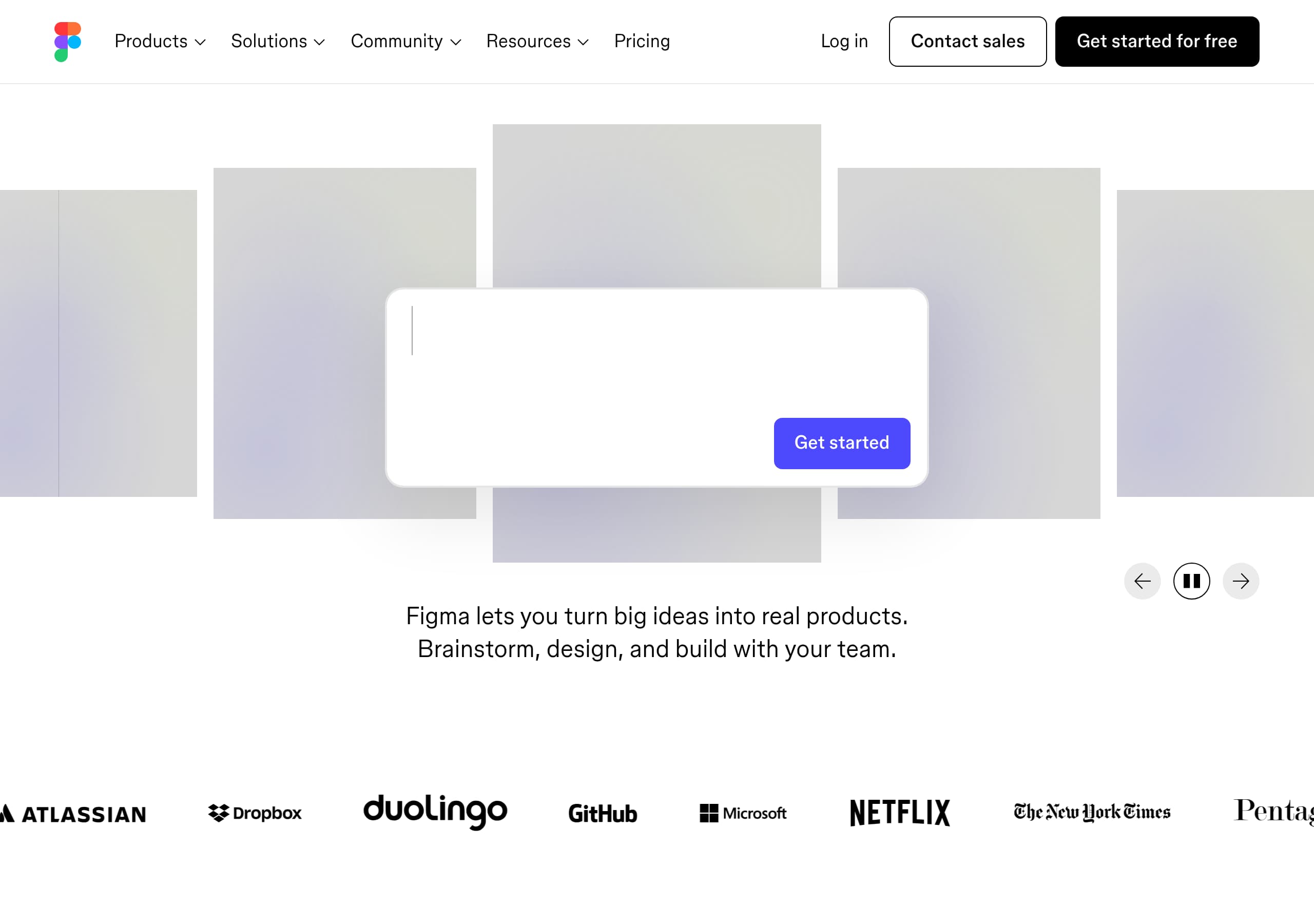 Figma
FigmaMake anything possible, all in Figma
View breakdown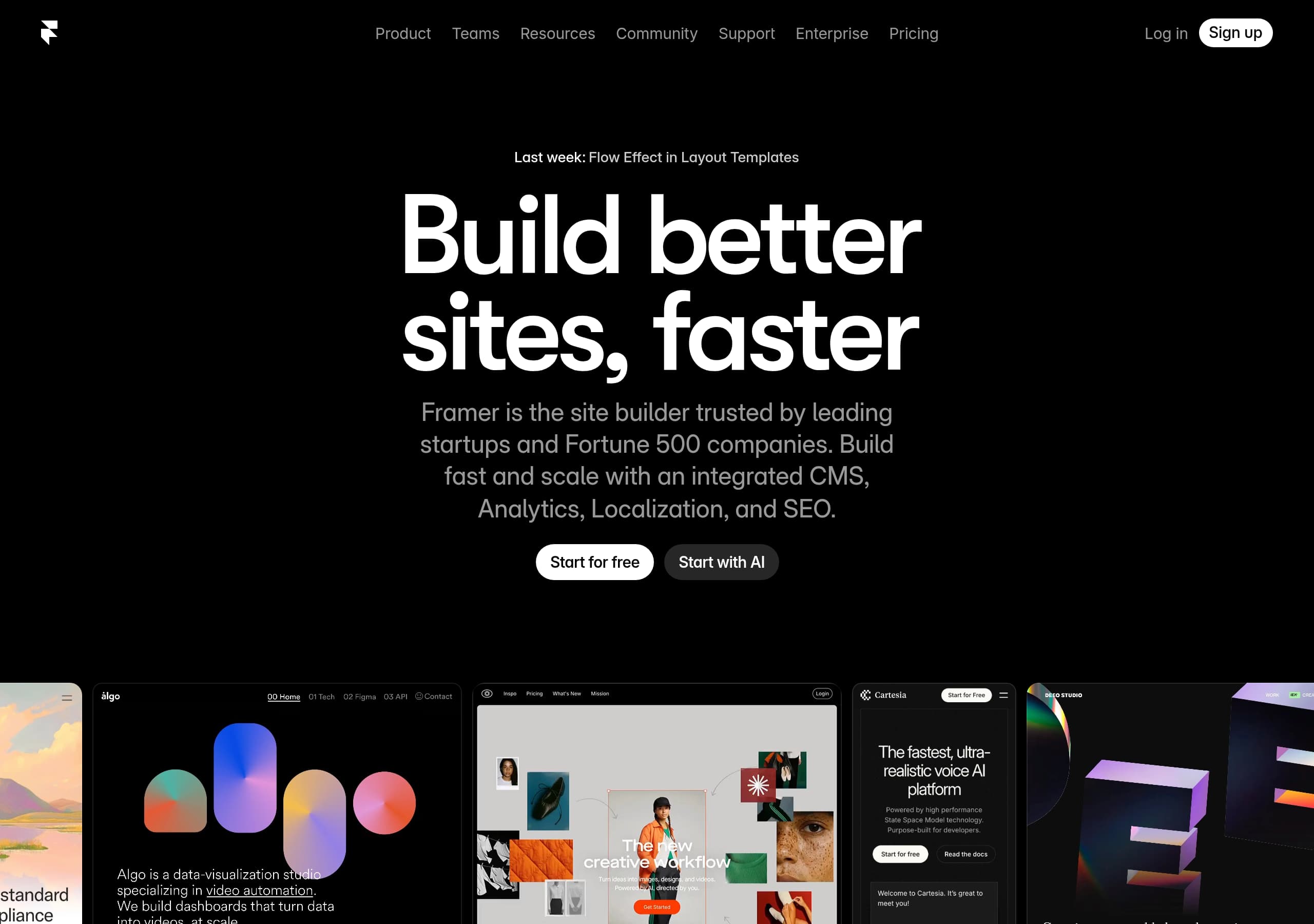 Framer
Framer’s homepage converts by pairing a single-sentence value proposition (“Build better sites, faster”) with dual, repeated CTAs (“Start for free” and “Start with AI”) that match two distinct entry intents.
View breakdown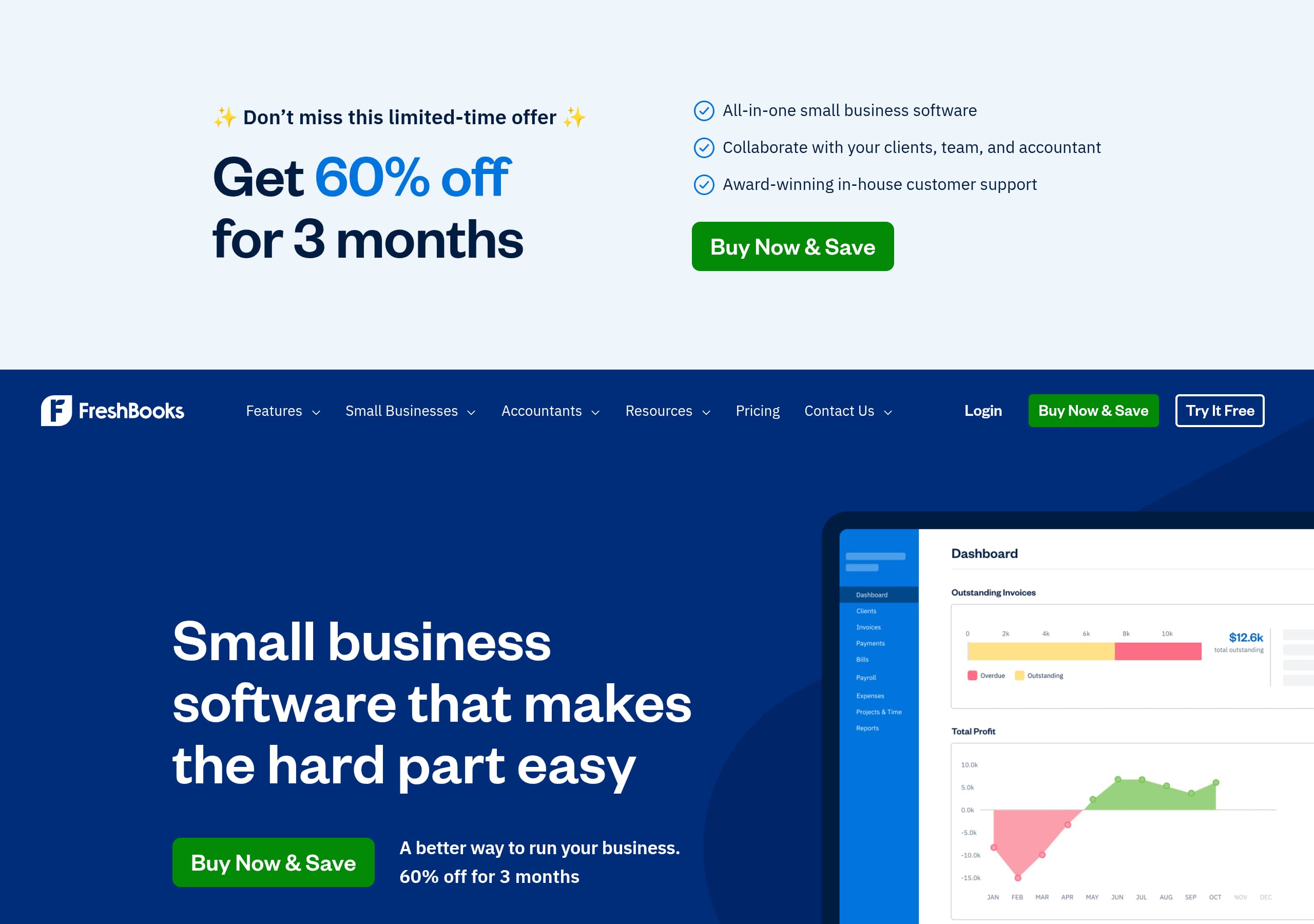 FreshBooks
FreshBooks leads with a concrete, time-saving promise (“makes the hard part easy”) and reinforces it with an explicit promo (60% off for 3 months) plus dual CTAs (“Try It Free” and “Buy Now & Save”).
View breakdown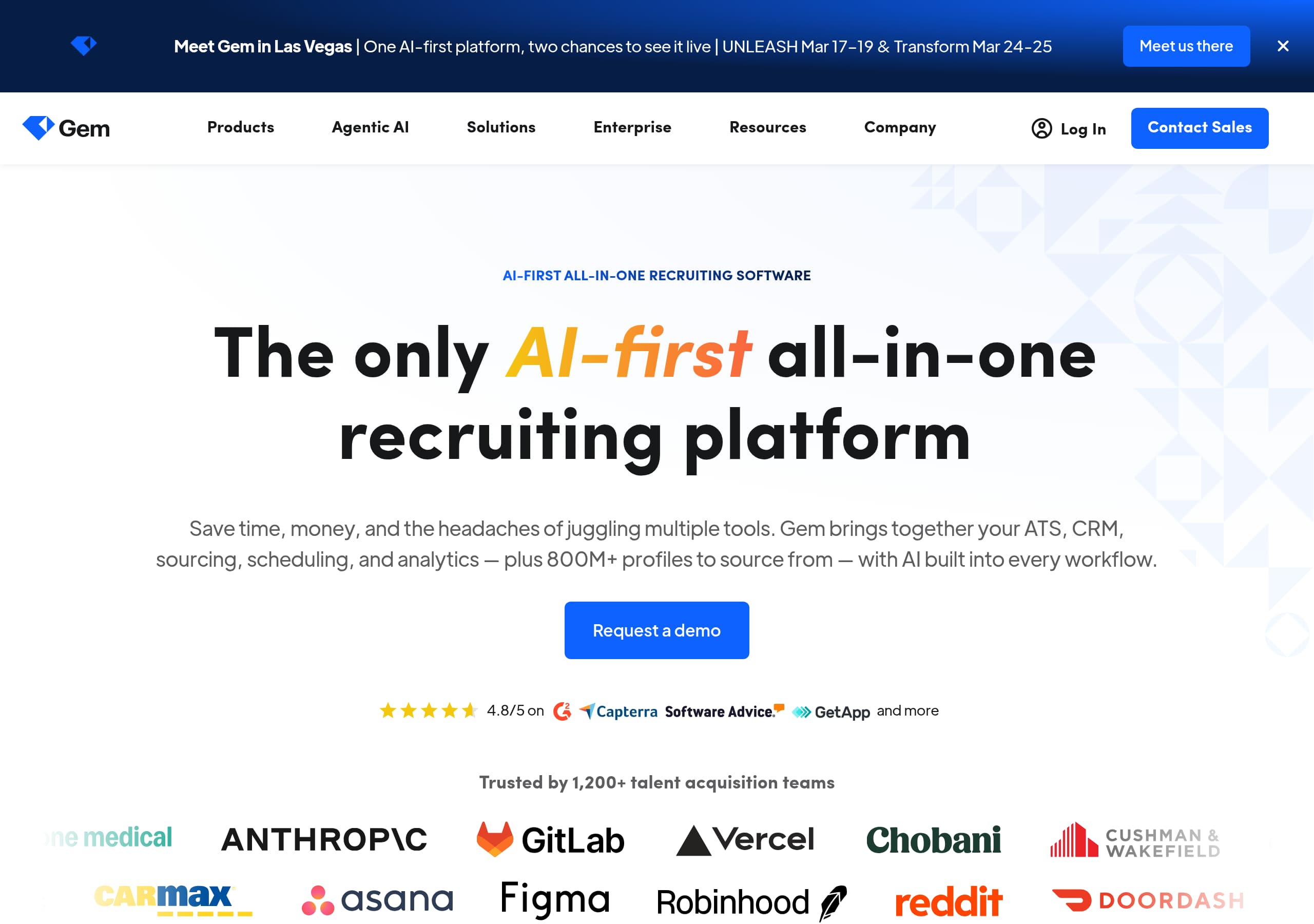 Gem
GemGem’s homepage nails positioning with a single, specific promise, “The only AI-first all-in-one recruiting platform,” then immediately enumerates what “all-in-one” includes: ATS, CRM, sourcing, scheduling, and analytics, which reduces ambiguity for b
View breakdown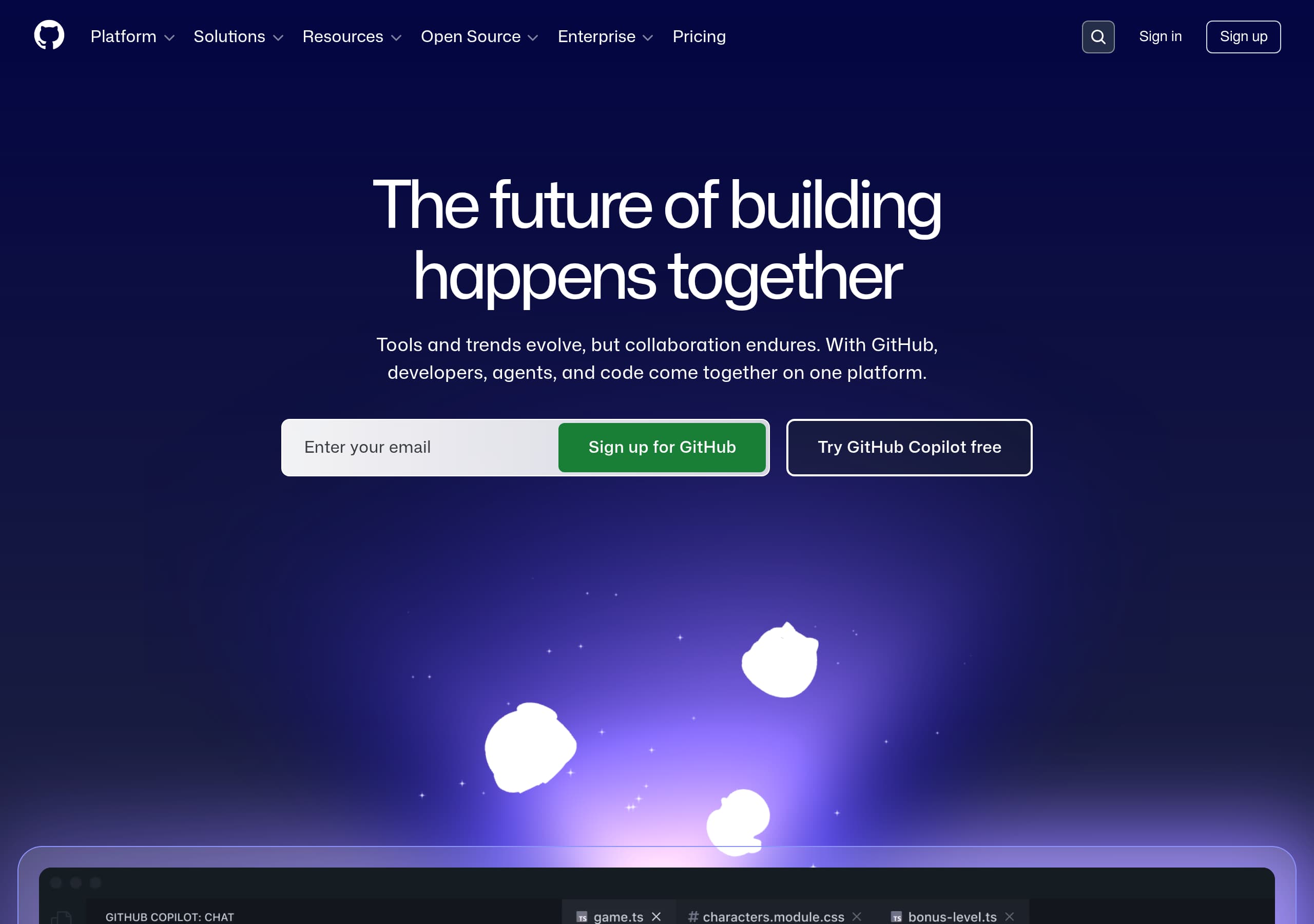 GitHub
GitHub’s homepage wins by combining an aspirational platform narrative (“The future of building happens together”) with immediate, product-level CTAs like “Sign up for GitHub” and “Try GitHub Copilot free,” reducing the gap between interest and actio
View breakdown
About our website breakdowns
We analyse each SaaS homepage as a full website teardown. That means we look at the hero, pricing, signup flow, trust elements, and tech stack in turn. Every breakdown comes with key takeaways, section-by-section notes, and the tools we detect. We also score each site on clarity, conversion, and trust so you can see what works and learn from the best-performing SaaS sites.